Table of Contents
PlayGround
Test stuff here.
Introduction
Presentation
This project, a collaborative effort by six European students, focuses on enhancing child well-being during the pre-visit phase. By blending engineering and creative design, we aim to transform the waiting experience through interactive digital art. As illustrated in Table 1, this multidisciplinary strategy ensures our intervention is inclusive, comforting, and tailored to the emotional needs of young users.
| Name | Country | Studies |
|---|---|---|
| Ronja Kruse | Germany | Dental Technology |
| Hanna Kaczmarek | Poland | Industrial Biotechnology |
| Anouc Daindu Goedhart | Netherlands | Industrial Design Engineering |
| Daniel Aagaard Pérez | Spain | Informatics Engineering |
| Julie Bonnet | France | Packaging Engineering |
| Kemal Yilmaz | Belgium | Electronics - ICT |
Motivation
Hospitals and waiting rooms can be stressful and uncomfortable for many patients, especially for children or people who need to stay for a longer period of time. Clinical healthcare environments are often designed mainly for medical efficiency rather than emotional comfort.
Research shows that the surrounding environment can influence patient well-being and recovery. Calming visual elements or familiar environments can help reduce stress and improve emotional comfort.
This project is motivated by the idea that technology can be used to create more comforting and supportive healthcare environments without requiring major physical changes. Immersive visual technologies offer new ways to improve patient experiences during the waiting time for a medical appointment or hospitalization.
Problem
Medical environments are often designed for medical efficiency rather than patient comfort, which can make them feel cold and impersonal. This can increase stress and anxiety for patients, especially due to unfamiliar surroundings and medical procedures. Research shows that calming visual environments or natural elements can help reduce stress and support recovery. However, many medical areas still lack accessible solutions to create more comforting and engaging environments for patients.
Objectives
The main objective of this project is to explore how immersive projection technology can improve the emotional experience of patients (especially children) in medical environments.
The specific objectives of the project are:
- To investigate how medical and hospital environments influence patient stress and recovery
- To explore existing technologies such as projection systems, immersive environments, and digital distraction therapy
- To develop a concept that transforms hospital or waiting rooms into calming and personalized spaces
- To reduce stress and anxiety for patients during hospitalization/waiting time
- To improve the overall patient experience through design and technology
The overall goal of the project is to design a concept that can create a more comforting and supportive hospital environment, particularly for children and long-term patients.
Requirements
The proposed solution must meet the following requirements:
User & Experience Requirements:
- The system must reduce patient stress and anxiety during waiting or treatment periods.
- The system must create a calming and comfortable environment using visual and sensory elements.
- The system must be suitable for children and adaptable to different age groups.
- The system must provide a sense of safety and personal space for the user.
Healthcare Environment Requirements:
- The system must be suitable for use in hospital or waiting room environments.
- The system must not interfere with medical equipment or workflows.
- The system must comply with hygiene standards for shared healthcare environments.
- The system must be easy to clean and maintain.
Functional Requirements:
- The system must provide immersive visual content (e.g. projection or display).
- The system must integrate at least two sensory elements (e.g. visual, audio, scent, or movement).
- The system must be easy to operate by healthcare staff.
- The system must allow quick setup and minimal preparation time.
Accessibility Requirements:
- The system must be accessible for users with reduced mobility (e.g. wheelchair users).
- The system must allow safe entry and exit.
Technical & Design Requirements:
- The system must be safe for use in indoor healthcare environments.
- The system must operate with low noise levels.
- The system must be energy-efficient.
- The system must have a compact footprint suitable for limited spaces.
These requirements are derived from user needs, healthcare constraints, and insights from the state-of-the-art analysis
Tests
Hardware Stress Testing
Functionality Tests
(FT-GY01) Baseline Calibration Read: Compare the GY-21 sensor's temperature and humidity output against a calibrated commercial environmental meter in a stable room environment to verify initial accuracy.
(FT-GY02) Thermal Responsiveness: Apply a localized heat source (e.g., physical contact) to the GY-21 sensor casing. Monitor the serial output to ensure a linear temperature increase is registered by the software.
(FT-GY03) Humidity Saturation: Expose the GY-21 sensor to concentrated moisture (e.g., direct exhalation) to force a rapid humidity spike, verifying the software registers the sudden change without integer overflow.
(FT-BH01) Lux Range Verification: Expose the BH1750 sensor to controlled lighting states ranging from total darkness (0 lx) to direct high-intensity LED light (> 10,000 lx) and log the output.
(FT-BH02) Shadow Transient Detection: Pass an opaque object over the BH1750 sensor at a constant speed to verify the system logs the temporary lux drop in real-time.
(FT-MQ01) Analog Voltage Baseline: Monitor the raw ADC output of the MQ-135 sensor in a ventilated environment to establish the “Clean Air” baseline after the initial thermal warm-up phase is complete.
(FT-MQ02) VOC Spike Detection: Introduce a controlled concentration of isopropyl alcohol vapor within 2 cm of the MQ-135 sensor mesh. Verify the analog output crosses the predefined software threshold for contamination.
(FT-WA01) Digital State Actuation: Toggle the microcontroller's GPIO pin to HIGH and LOW states to verify the immediate start and stop of ultrasonic mist production from the Grove Water Atomizer.
(FT-WA02) Capillary Wicking Action: Place the atomizer disk on a saturated absorbent material to verify continuous water delivery to the piezoelectric mesh without full submersion causing acoustic failure.
(FT-SYS01) I2C Address Multiplexing: Sequentially poll the GY-21 (0x40) and BH1750 (0x23) on the same physical I2C bus to ensure no data collisions or library conflicts occur during simultaneous operation.
Performance Tests
(PT-GY01) Environmental Recovery Rate: Measure the time required (in seconds) for the GY-21 humidity readings to return to the baseline ambient level after a forced saturation event.
(PT-GY02) I2C Polling Stress: Query the GY-21 sensor at a high frequency (every 50 ms) for 5 continuous minutes to verify data integrity and the absence of I2C bus lockups.
(PT-BH01) Continuous Light Exposure: Expose the BH1750 sensor to a constant 1,000 lx light source for 1 hour to verify reading stability and confirm the absence of sensor drift over time.
(PT-BH02) High-Frequency Illuminance Transitions: Toggle a light source at 10 Hz and monitor the BH1750 sensor's ability to track the fluctuating lux values without data freezing or communication failure.
(PT-MQ01) Thermal Burn-in Stabilization: Power the MQ-135 sensor continuously for 48 hours. Log the baseline drift to ensure the internal heating element stabilizes and analog variation does not exceed a ±3 % margin.
(PT-MQ02) Dissipation Latency: Remove the VOC source and measure the time required (in minutes) for the MQ-135 analog signal to dissipate and return to the previously established “Clean Air” baseline.
(PT-WA01) Duty Cycle Endurance: Operate the Grove Water Atomizer on a predefined loop (4 seconds ON, 3 seconds OFF) for 1,000 cycles to evaluate hardware durability and check for mesh calcification.
(PT-WA02) Driver Board Thermal Load: Run the Grove Water Atomizer continuously for 60 minutes. Measure the surface temperature of the NE555 timer component on the driver board using an infrared thermometer to ensure it remains below 55 °C.
(PT-SYS01) Rail Voltage Stability: Measure the ESP32's 3.3 V and VBUS rails with a digital oscilloscope during the atomizer's peak activation surge. Verify that the voltage drop remains < 0.2 V to prevent microcontroller resets.
(PT-SYS02) End-to-End Latency: Measure the total time elapsed between the MQ-135 detecting a VOC spike and the ESP32 successfully triggering the Water Atomizer actuator to respond to the event.
Web Application Stress Testing
To test the stability and response time of the web application, a simple performance test was conducted using k6. The application ran in a Docker-based environment, with Docker Compose used to manage the services and to run the k6 test runner.
The test simulated 5 virtual users continuously using the application for 2 minutes. The k6 script sent HTTP requests to the backend/API endpoints and checked if the responses returned the expected status codes, such as 200, 201, or 401.

As shown in Figure 1, the application processed 1,130 HTTP requests with a failure rate of 0.00 %. All checks were completed successfully: 1,130 out of 1,130 checks were completed. The average response time was 34.21 ms, and the response time at the 95th percentile was 95 ms, which is well below the set limit of 2,000 ms.
These results demonstrate that the web application remained stable and responsive under the tested load. Since the test was limited to 5 virtual users, it should be considered an initial performance test rather than a full-scale stress test.
Usability Testing
In addition to the technical tests, a small usability test was also done to get early feedback on the Healing Cocoon web application. While the stress tests focused on technical stability and performance, the usability test focused on how clear, understandable, and user-friendly the prototype felt to potential users.
The usability test was designed as an online survey. Participants were asked about their first impression of the application, the clarity of the layout, the ease of use of the main features, and whether the design seemed suitable for children aged 6 to 13.

The Figure 2 shows that the survey was completed by 4 participants, and the average completion time was 4 minutes and 53 seconds. Given the limited number of participants, the results should be viewed as early feedback and not as final validation.
Overall, the feedback was positive. Participants generally found the layout clear and the main functions user-friendly, such as choosing a world, starting a session, and understanding the sound and scent settings. The breathing exercise was also found to be helpful by the participants. The open-ended feedback revealed that users appreciated the soothing colors, the simple layout, and the various themes, such as “Forest” and “Space.” Several potential improvements were also mentioned, such as making the “Start” button more visible and adding more options for programs, scents, visualizations, or music.
Based on this small-scale user test, the prototype appears to be intuitive and user-friendly, but further research with more participants is needed to make more definitive conclusions.
Report Structure
| Chapter | Description |
|---|---|
| 1 Introduction | Introduction of the team, the topic, the problem and the objectives within the project |
| 2 Background and related work | Existing research and studies |
| 3 Project Management | Overview of the methods used within the team for project management |
| 4 Marketing Plan | Market analysis, identification of the competitors, and market strategy |
| 5 Eco-efficiency Measures for Sustainability | Measures to minimize the ecological footprint of the project and the most important aspects of sustainable development and eco-efficiency |
| 6 Ethical and Deontological Concerns | Analysis of ethical considerations to be taken |
| 7 Project Development | Development of the product from concept to prototype |
| 8 Conclusions | Discussion of everything that has been achieved with the project |
| 9 Acknowledgements | Bibliography of sources and articles used |
Background and Related Work
Research
We observed that certain sensory stimuli have a calming effect on the human body and can help reduce stress, anxiety, and the perception of pain. The scents of orange and lavender, in particular, demonstrated a relaxing effect and contributed to an enhanced sense of well-being.
Additionally, it was observed that calm, familiar sounds as well as nature sounds such as rain, the sound of the ocean, or birdsong create a soothing atmosphere. These auditory stimuli can help alleviate feelings of anxiety and make pain feel subjectively less intense.
The results suggest that the targeted use of scents and soothing sounds can have a positive impact on both emotional and physical relaxation.
Introduction
Research shows that the environment in healthcare facilities has a significant impact on patient well-being and recovery. Sterile and impersonal environments can increase stress and anxiety, especially in children prior to medical procedures. Studies using the Modified Child Dental Anxiety Scale (MCDAS) report anxiety prevalence rates between 13.3 % and 29.3 % [1].
Introducing calming visual elements such as nature imagery, colors, and familiar environments can help reduce psychological stress and improve emotional comfort. In this context, digital technologies such as projection systems and virtual reality are increasingly used to create immersive and engaging environments. These technologies aim to distract patients from anxiety, pain, and medical procedures, thereby improving the overall patient experience.
Concepts
This part presents the key concepts that form the foundation of the Healing Cocoon project. Drawing from research in healthcare design and patient well-being, it explores healing environments, multisensory interventions, digital distraction therapies, immersive technologies, and cocoon environments. Together, these concepts provide the theoretical basis for the design choices made in this project.
Healing environments in hospitals
According to the principles of Evidence-Based Design (EBD) intoruced previously, a “healing environment” is defined as a physical space where the interaction between patients, staff, and the environment actively results in positive health outcomes [2]. Rather than passive background for medical procedures, the physical setting is now more often recognised as both a “tool and healer” that can support the welness process through psychophysiological effects [3]. To transform sterile, standard clinical waiting rooms into a functioning healing environment, some core environmental and psychological factors must be adressed.
Sensory overload and mitigating surroundings stressors
The traditional concept of the healing environments relies on minimizing ambient stressors that causes anxiety. Hospitals and clinics are elementally filled with environmental stressors, including unfamiliar medical equipment, harsh lightning, lack of privacy [4]. Excessive clinical noise from paging systems, alarms and voices are also source of distress [5]. In some clinical units, equipment noise levels can reach up to 90 dB(A), which is equivalent to the threshold where hearing loss can begin [6]. These uncontrolled acoustic environments disrupt rest, increase blood pressure, and heighten feelings of helplessness [7]. To effectively stop this sensory overload, spaces must be designed with acoustic comfort in mind. Providing sound-absorbing materials, such as specialized acoustic panels or ceiling tiles significantly reduces noise propagation and lowers the stress for bith patients and staff [8], [9].
Privacy and control
Another psychological contributor to hospital-induced anxiety is the patient's loss of control over their unfamiliar surroundings. When patients feel they have lost control over every sesnory input or task, it triggers cognitive, affective and physiological consequences that can strongly interfere with treatment and recovery [10]. Providing patients with the ability to take control over their immediate environment - such as adjusting lighting, temperature or sound - restores their autonomy and act as a powerful buffer against stress [11], [12]. Additionaly, traditional waiting areas usually lack adequate privacy; for instance , overhearing clinica conversations at a reception desk is a frequently cited stressor [13]. Providing a semi-enclosed, private sanctuary shields the patients from the unpredictable nature of a shared waiting room, restoring a sense of security [14].
Multisensory experience: Scent, Visuals, Light
An advanced healing environment utilizes multisensory, non-pharmacological interventions to regulate patient emotions, such as:
- Color and Light interaction:
The color and type of light around us have a big impact on how we feel [15]. Research shows that light that changes or moves creates much stronger emotional feelings than light that stays the same [16]. Scientists have found that using green or blue-green light along with slow, guided breathing - specifically one breath every 5 seconds - helps the body relax [17]. This effectively increases Heart Rate Variability (HRV) and quickly lowers feelings of stress or tension waiting in a room [18]. Additionally, looking at nature or pictures of landscapes is a great distraction that easily keeps people's attention and helps them feel more peaceful [19].
- Scent stimulation
Our sense of smell is connected directly to the parts of the brain that handle emotions, so certain scents can quickly change how we feel. Studies show that smelling specific scents, especially orange and lavender oils, works like a natural way to relax the body [20]. When these smells are used in dental waiting rooms, they greatly lower anxiety and help patients feel much calmer and happier while they wait for their treatment [21].
In summary, an effective healing environment must address these diverse sensory needs simultaneously. By integrating acoustic control, lighting, calming scents, and architectural privacy, a space can actively counteract the depersonalization and fear often felt in hospitals, calming the patient before they ever reach the doctor's room.
Digital distraction therapy
Digital distraction therapy is increasingly used in healthcare to help patients cope with stress, anxiety, and pain. The idea behind distraction therapy is to shift the patient’s attention away from medical procedures or discomfort [22]. Examples include:
- Digital games and immersive environments have been explored as effective tools to increase patient engagement and reduce perceived stress in healthcare settings [27].
These findings highlight the importance of distraction as a mechanism for reducing anxiety. However, many existing solutions rely on screens or wearable devices. This project builds on these insights by creating a more immersive, non-wearable environment that integrates distraction into the surrounding space.
Virtual reality/Smart glasses
Virtual Reality (VR) and smart glasses provide immersive or augmented visual experiences directly in the patient’s field of view. VR technology is widely used in healthcare to reduce anxiety by immersing patients in virtual environments.
Al-Nerabieah et al. (2020) [28] evaluated the impact of VR eyeglasses in a dental waiting room and found that their use significantly decreased anxiety levels in children aged 6–10 years. While VR offers high levels of immersion, it requires wearable devices, which may be uncomfortable or impractical in some healthcare situations. VR demonstrates the strong impact of immersive environments on anxiety reduction. However, the reliance on wearable devices introduces limitations in hygiene, comfort, and usability. This project takes inspiration from the immersive aspect of VR, while eliminating the need for wearables.
Cocoon environments
Cocoon environments are designed to create a protected and calming space around the patient. The idea of a cocoon is to reduce the feeling of being in a clinical hospital environment and instead provide a sense of safety, comfort, and privacy. In healthcare design, a cocoon concept often uses visual elements, lighting, or digital technology to surround the patient with soothing stimuli. This can help reduce stress, anxiety, and sensory overload during hospitalization. Examples include:
- Immersive projection environments that transform spaces into calming scenes, such as nature or abstract environments, have been shown to reduce stress and improve emotional well-being in healthcare settings were successfully tested in this study [29].
- Soft lighting systems combined with visual environments, such as natural or familiar imagery, can create a more relaxing atmosphere in patient rooms and improve emotional comfort were tested by this study [30].
- Enclosed or semi-enclosed relaxation spaces can provide patients with a sense of privacy and safety, reducing external stimuli and contributing to lower stress levels were explored by [31]
These concepts form the foundation of the proposed solution. By combining immersion, multisensory stimulation, and a semi-enclosed structure, the cocoon integrates the most effective elements identified in the literature. This allows the design to create a controlled, calming environment that enhances both emotional comfort and anxiety reduction.
Products
Market Analysis – Healing Spaces
Competitor Landscape There are several established companies focusing on transforming hospital environments through immersive and sensory design solutions.
Key Players
Direct Competitors
Philips Healthcare – Ambient Experience
What they do: Philips Healthcare [32] is a market leader in creating immersive healthcare environments by integrating dynamic lighting, video projection, and sound into treatment spaces such as Magnetic Resonance Imaging (MRI) and Computed Tomography (CT) rooms.
Strengths: Highly professional and medically certified solution, seamlessly integrated into hospital architecture, with proven impact on reducing patient anxiety.
Weaknesses: Extremely expensive and primarily focused on diagnostic environments (MRI, CT rooms), making it less accessible for everyday patient rooms or long-term care settings.
Qwiek (Qwiek.up)
What they do: Qwiek [33] is a Dutch company that develops mobile projection systems designed for use in healthcare environments, particularly in elderly care and hospitals. The system projects calming visuals, such as nature scenes, onto walls or ceilings to create a more relaxing atmosphere for patients.
Strengths: Mobile and easy to use, allowing the device to be moved between rooms. The system is accessible and requires minimal setup, making it suitable for various healthcare settings.
Weaknesses: The device is a standalone floor unit, which takes up space in already crowded environments. In addition, the level of interactivity is limited, offering mainly passive visual experiences with minimal user engagement.
This solution demonstrates the potential of projection-based environments but lacks immersion and a sense of personal, enclosed space, which our cocoon concept aims to provide.
Indirect Competitors & Substitutes
SyncVR Medical
What they do: SyncVR Medical [34] is a Dutch company that provides Virtual Reality (VR) solutions for healthcare. Their platform offers immersive VR experiences designed to reduce pain, anxiety, and stress during medical procedures, particularly in pediatric and clinical settings.
Strengths: Highly immersive experience that effectively distracts patients from medical procedures. Proven to reduce anxiety and pain perception. The system is relatively portable and can be used across different departments.
Weaknesses: Requires wearable VR headsets, which raises hygiene concerns in shared environments. Some patients may feel uncomfortable or disoriented when using VR. In addition, setup and supervision are often required, making it less practical for continuous or large-scale use.
This highlights the limitations of wearable VR solutions in healthcare, reinforcing the need for immersive, non-wearable environments such as the proposed cocoon concept.
Projects
Market Trends
Evidence-Based Design (EBD)
Hospitals are increasingly designed based on scientific evidence showing that the physical environment influences patient recovery, stress levels, and overall well-being. Design elements such as lighting, color, and visual stimuli are used to create more supportive healing environments. An example of this approach can be seen in the Princess Máxima Center for Pediatric Oncology, where the environment is specifically designed to improve patient experience.
Research [35] shows that the physical hospital environment directly influences patient recovery, stress levels, and overall well-being.
Staff Shortages & Efficiency
Healthcare systems are increasingly facing staff shortages, creating a demand for solutions that can support patient care without requiring constant supervision. Technologies that help calm, distract, or engage patients can reduce the workload on healthcare professionals.
Design interventions and environmental solutions can reduce patient stress while simultaneously improving workflow efficiency, helping to relieve pressure on healthcare staff [36].
Comparative Analysis
To determine the most effective solution for reducing anxiety in children, various existing technologies and approaches were analyzed and compared. This comparison focuses on key criteria such as immersion, comfort, hygiene, ease of use, and feasability in healthcare settings.
VR Headsets offer a highly immersive experience by completely blocking out the real world and placing the user in a virtual environment. This can help reduce anxiety and stress, and research [37] shows that VR can be effective in distracting children during medical procedures. However, VR also has a number of disadvantages. In shared environments such as waiting rooms, hygiene is a concern, as the headset must be cleaned after each use. Some children may also feel uncomfortable wearing a headset, especially if they are already anxious. Furthermore, the time required to set up and reset the device makes it less practical for multiple users.
Smart glasses or Augmented Reality (AR) glasses are an innovative solution that combines digital elements with the real world. They are lighter than VR headsets and allow the user to remain aware of their surroundings while still interacting with virtual content. On the other hand, this technology is still relatively expensive and has not yet been widely adopted in healthcare. The level of immersion is also lower than with VR, making this technology less effective as a distraction. Therefore, AR glasses are currently less suitable for these types of applications.
Projection-based environments create immersive images on walls or surfaces without requiring the user to wear a device. This makes them highly accessible, hygienic, and user-friendly for multiple children. However, the experience is less immersive compared to other solutions. Children remain aware of the waiting room, which can reduce the calming effect. Furthermore, there is a lack of a sense of a personal or protected space, which is important for children with anxiety symptoms.
Multisensory cocoon (our solution) combines various sensory elements, such as visuals, sound, scent, and gentle movements, into a single environment. It creates a semi-enclosed space that gives children a sense of security and reduces external stimuli. Compared to other options, the cocoon offers a better balance between immersion and comfort. No wearable devices are required, making it more hygienic and easier to use in shared environments, while the combination of multiple senses promotes relaxation and distraction. The main downsides are that it requires physical installation and that the design is more complex compared to simpler solutions. However, these challenges are acceptable given the benefits the cocoon offers. Furthermore, the cocoon can be designed to be inclusive and accessible to all users, for example by making the seats removable and integrating a small ramp, allowing children in wheelchairs to easily enter and use the system.
To support the comparison, a decision matrix was created using key evaluation criteria. Each solution was scored from 1 (low) to 5 (high). Table 2 provides the result.
| Solution | Immersion | Comfort | Hygiene | Practicality | Feasability | Total |
|---|---|---|---|---|---|---|
| VR Headset | 5 | 2 | 2 | 2 | 3 | 14 |
| AR Glasses | 3 | 2 | 2 | 2 | 2 | 11 |
| Projection | 3 | 4 | 5 | 4 | 4 | 20 |
| Cocoon | 4 | 5 | 4 | 4 | 3 | 20 |
Although projection systems and the cocoon achieve similar total scores, projection-based solutions lack the ability to create a personal and protected environment. For children experiencing anxiety, a sense of safety and reduced external stimuli is essential.
The cocoon provides a semi-enclosed, multisensory environment that enhances both emotional comfort and immersion. By combining the advantages of projection systems with a protected spatial design, the cocoon addresses the key limitations of existing solutions.
Therefore, the multisensory cocoon is considered the most suitable solution for reducing anxiety in pediatric healthcare environments.
Summary
Based on the state-of-the-art analysis, it can be concluded that existing solutions such as Virtual Reality, Augmented Reality, and projection systems each offer specific advantages in reducing anxiety in healthcare environments. However, none of these solutions fully combine immersion, comfort, hygiene, and practicality.
The selected approach combines projection-based visualization techniques, multisensory stimulation, and a semi-enclosed spatial design to create a controlled and calming environment around the patient.
Key components of the system include a short-throw projector, integrated speakers, a scent diffuser, ambient lighting elements, and a supportive seating structure within an enclosed shell.
This solution was chosen because it provides an optimal balance between immersion, comfort, hygiene, and practicality. Unlike VR systems, it does not require wearable devices,making it more suitable for shared healthcare environments. Compared to projection-only systems, the enclosed structure enhances the sense of safety and reduces external stimuli, which is essential for reducing anxiety in children.
Therefore, the proposed concept is an evidence-based multisensory cocoon that combines the advantages of existing technologies while addressing their limitations.
The next chapter will focus on the project management approach, describing how the project was structured, planned, and executed throughout the development of the cocoon concept.
Project Management
In this chapter, we will develop our project management approach by describing several aspects such as the scope, time, project plan and our understanding and use of Jira, particularly with sprints.
Scope
Defining the scope of the Healing Cocoon is essential for keeping our multidisciplinary efforts focused on the project's core objectives: reducing children's anxiety and transforming clinical waiting rooms into calming, immersive spaces. The scope of our project focuses on the research and development of a solution up to the proof-of-concept stage. This involves focusing on the structure, design, materials, app, and smart devices. While the final product is intended for specialized pediatric clinics, our current technical focus is on building a working prototype to prove our technology and sensory integration work effectively.
To prevent scope creep and ensure a clear roadmap from conceptualization to final deployment, we have systematically organized our tasks. The Work Breakdown Structure (WBS), Figure 3 presented below illustrates how we have divided the project into manageable phases—Management, Research, Design, Development, Testing, Marketing, and Reporting—and their specific deliverables. This framework ensures that every team member understands their responsibilities and the steps required to deliver a safe, inclusive, and fully functional prototype.

Time
To make sure we finish this project within the 15-week semester, we break our work down into small, weekly goals. We use task-tracking software to organize who is doing what every week. This flexible approach allows us to design the physical pod and write the software at the same time. While our weekly tasks are flexible, we make sure to always pay attention to the major deadlines and closely monitor progress over time.
Here the details of the milestones of our project:
2026-02-28 Choose and share top-3 preferred project proposals via email (epsatisep@gmail.com)
2026-03-11 Upload “black box” System Diagrams & Structural Drafts to Deliverables
2026-03-18 Upload List of Components and Materials (Deliverables)
2026-03-21 Define the Project Backlog (what must be done and key deliverables - every member should preferably participate in every task), Global Sprint Plan, Initial Sprint Plan (which tasks should be included, who does what) and Release Gantt Chart of the project and insert them on the wiki (Report)
2026-03-25 Upload detailed System Schematics & Structural Drawings (Deliverables) and do the cardboard scale model of the structure
2026-04-12 Upload Interim Report and Presentation (Deliverables)
2026-04-16 Interim Presentation, Discussion and Peer, Teacher and Supervisor feedbacks
2026-04-22 Upload 3D model video (Deliverables)
2026-04-29 Upload final List of Materials (local providers & price, including VAT and transportation) to Deliverables
2026-05-02 Upload refined Interim Report (based on Teacher & Supervisor Feedback)
2026-05-13 Packaging solution (Deliverables and Report)
2026-05-27 Results of the Functional Tests (Report)
2026-06-13 Final Report, Presentation, Video, Paper, Poster and Manual (Deliverables)
2026-06-18 Final Presentation, Individual Discussion and Assessment
2026-06-23 Update the wiki, report (suggested corrections), upload refined deliverables in shared section of MS Teams (source and PDF), printed copy of the poster, brochure and leaflet for EPS coordinator
2026-06-25 Submit prototype and user manual, prototype demonstration
Cost
We need to clearly separate two different prices: the price of the final product and the budget we have right now. While the final Healing Cocoon will be sold to clinics for about 2000 € to 2500 €, our goal right now is just to build a working test model (prototype) to prove our technology works.
For this first prototype, the EPS program gave us a 100 € budget limit. To make sure we don't spend too much, we are using affordable, easy-to-find materials for the physical frame. For the smart system, we are using low-cost electronic sensors and a basic microcontroller (ESP32).
| Required component | Description | Total Budget (€) | Actual Costs (€) |
|---|---|---|---|
| Smart brain & sensors | ESP32 board, and sensors for light, carbon dioxide and humidity | 25.00 | 3.67 |
| Output devices | Scent sprayer, speaker amplifier, and relay switch | 25.00 | 22.98 |
| Power supply | 5 V 2 A USB wall plug | 25.00 | 7.26 |
| Building materials | Fiberglass rods, hula hoop, spandex, acoustic foam, PVC | 40.00 | (Pending purchase) 0.00 |
| Total prototype budget | 100.00 | 53.91 |
Quality
To make sure the Healing Cocoon is safe for children and works perfectly in a real clinic, we set clear quality goals. We constantly check our work through team reviews, teacher feedback, and physical testing.
1. Building & Hardware Quality
- Wheelchair access - The opening and inside of the pod must be big enough for a standard child's wheelchair to roll right in without the child needing to stand up.
- Cleanliness & Hygiene - All inside surfaces must be easy to wipe down and made of materials that stop germs from spreading. They must also survive standard clinic cleaning sprays without getting damaged. This will be done by checking the manufacturer's safety sheets and testing the materials with cleaning sprays.
- Fast Electronics - When the smart system (the ESP32) senses something, the lights, sounds, or scents must react in less than 2 seconds so the experience feels magical and natural. This is going to be tested by running the code and testing the electronics over and over to find any delays.
2. Structure and hardware quality
To make sure the Healing Cocoon is safe, reliable, and effective before being used in clinics or therapy spaces, our company will carry out several types of quality testing during development and before final deployment.
- Hardware quality - Every electronic feature of the cocoon will be tested repeatedly to confirm it works correctly. This includes checking the lighting system, sound system, scent diffuser, sensors, and the ESP32 smart controller. Each function must respond correctly without delays, freezing, or unexpected shutdowns. The entire hardware system will be tested by our company before being shipped. The tests performed will be those referenced in the Tests part of our report.
- Assembled cocoon quality - The cocoon must conform to the original dimensions and remain stable and safe after long periods of use. To ensure this, our company will conduct various tests detailed in Figure 4.

We are also focusing on clear and consistent report for keeping the track of our progress and milestones achieved. We use a final “cross-check checklist” before submission, ensuring all numbers, part names, and deadlines match across every single chapter.
People & Stakeholder Management
1. Definition of the people and stakeholders of the Healing Cocoon:
To make sure our project runs smoothly, we have clearly defined the roles of our internal team members and identified the external groups (stakeholders) who care about the success of the Healing Cocoon.
The Project Team (Internal) Our team is made up of six international students from different academic backgrounds. Because we have different skills, we divided the project responsibilities to match our strengths:
- Ronja Kruse (Dental Technology): Provides medical insights for the clinic environment, helps with B2B marketing, and designs the wheelchair-accessible layout.
- Hanna Kaczmarek (Industrial Biotechnology): Focuses on ergonomic dimensions, market analysis, and the business SWOT analysis.
- Anouc Goedhart (Industrial Design Engineering): Leads the 3D design models, branding (flyers/leaflets), and the visual identity of the Cocoon.
- Daniel Aagaard Pérez (Informatics Engineering): Handles the smart system hardware, projector integration, and the detailed technical schematics.
- Julie Bonnet (Packaging Engineering): Manages material selection, eco-efficiency research, and building the physical cardboard scale model.
- Kemal Yilmaz (Electronics - ICT): Develops the software app, the user interface (UI), and database management.
Key External Stakeholders These are the people outside our team who are impacted by our project:
- EPS Supervisors & Teachers: They guide our academic progress and grade our deliverables. We manage their expectations by meeting all deadlines and updating our Wiki logbook.
- Clinic Directors (The Customers): The private dentists and therapists who will buy the Cocoon. We manage them by proving the product is easy to clean and will save their clinic time and money.
- Patients & Parents (The Users): The anxious children and their parents. We manage their needs by ensuring the final pod is safe, calming, and inclusive.
- Local Suppliers: Companies like F. Marques da Silva and Artnovion who provide our materials.
2. Stakeholder Satisfaction Strategy:
The success of the Healing Cocoon depends on meeting the expectations of all stakeholders involved. To keep stakeholders satisfied, we will maintain regular communication, gather feedback throughout the project, and ensure that their needs are reflected in the final design.
Project Team Members Team satisfaction will be maintained through clear role allocation, weekly meetings, and shared project planning tools. Regular progress reviews will help identify challenges early, distribute workload fairly, and ensure that all team members can contribute according to their expertise.
EPS Supervisors & Teachers We will keep supervisors and teachers satisfied by meeting deadlines, maintaining an up-to-date Wiki logbook, attending scheduled meetings, and actively implementing their feedback. Draft reports and design updates will be shared regularly to ensure the project remains aligned with academic requirements.
Clinic Directors (Customers) Clinic directors are primarily concerned with safety, practicality, and return on investment. We will address these expectations by demonstrating that the Healing Cocoon is easy to clean, reliable, wheelchair-accessible, and capable of improving the patient experience. Feedback from clinic professionals will be incorporated into design decisions whenever possible.
Patients & Parents (End Users) The needs of children and parents are central to the project. Their satisfaction will be supported through a safe, calming, and inclusive design. User feedback sessions, observations, and surveys will be used to evaluate comfort, accessibility, and overall experience. Any concerns regarding safety, hygiene, or usability will be addressed during the design process.
Local Suppliers Strong relationships with suppliers will be maintained through professional communication, clear specifications, and timely requests for materials. Keeping suppliers informed about project requirements and deadlines will help ensure reliable deliveries and consistent material quality.
3. Measuring Stakeholder Satisfaction:
To evaluate whether stakeholder expectations are being met, we will use:
- Regular feedback meetings with supervisors and project mentors.
- Surveys or interviews with potential users and healthcare professionals.
- Progress reviews against project milestones and deadlines.
- Testing sessions to collect comments on usability, safety, and comfort.
- Documentation of stakeholder feedback and the actions taken in response.
By continuously collecting and acting upon feedback, the project team can ensure that the Healing Cocoon remains aligned with stakeholder expectations and delivers value to all groups involved.
Communications
Effective communication is essential for the success of the Healing Cocoon project, particularly given our multidisciplinary and multicultural team composition. To maintain transparency, ensure accountability, and streamline collaboration, we have established a clear communication strategy using a mix of real-time messaging, centralized project management, and formal channels.
- Communication channels
WhatsApp for internal team messaging
We utilize WhatsApp for daily, informal communication, quick check-ins, and immediate team coordination. This channel is reserved for urgent updates and fostering team cohesion.
Microsoft teams for document & meeting management
Teams serves as our central repository for all project documentation and deliverables. We use this platform to communicate with our EPS coordinators, store shared files, and manage meeting notes to ensure a persistent record of all collaborative decisions.
Outlook for formal communication
All official correspondence with our EPS coordinators, supervisors, and external project partners is conducted via Outlook. This ensures a professional and searchable audit trail for all high-level project agreements and milestones.
- Task Management
Jira for workflow tracking
We use Jira as our primary tool for monitoring project progress against our defined timeline. All daily, weekly, and monthly tasks are tracked here to ensure alignment with our project milestones. Jira allows every team member to see the status of their assigned tasks and provides a transparent view of the project backlog, ensuring we meet our critical deadlines.
- Meeting Strategy
Our meeting schedule is designed to balance progress monitoring with collaborative problem-solving:
Weekly Team Meetings
Held to review the status of our tasks in Jira, align on deliverables, and solve technical challenges.
Supervisor Check-ins
Formal meetings scheduled through Outlook or Teams to present our progress, review deliverables, and incorporate supervisor feedback into our design and development process.
Risk
This chapter identifies the risks that may arise during the Healing Cocoon project and defines how they will be prevented, monitored, and managed if they occur. Each risk is assessed on two dimensions: likelihood (how probable it is) and severity/impact (how damaging the impact would be). The product of these two gives a risk score, which determines the priority for mitigation.
Risk Classification
Risks are categorized by type to make it easier to assign ownership and response strategies:
- Project risks — affect schedule, scope, budget, or team capacity.
- Technical risks — affect hardware, firmware, software, or integration.
- Operational risks — affect day-to-day execution and infrastructure.
- Safety & environmental risks — affect user safety, child health, or clinic hygiene.
Likelihood and Severity Scales
The evaluation follows a 5×5 Risk Matrix based on PMBOK standards, where the exposure score is calculated by multiplying Probability/Likelihood (1–5) and Impact/Severity (1–5).
| Level | Likelihood / Probability | Severity / Impact |
|---|---|---|
| 1 | Improbable / Rare | Negligible / Insignificant |
| 2 | Remote | Marginal |
| 3 | Possible | Moderate |
| 4 | Likely / Almost Certain | Critical |
| 5 | Frequent | Catastrophic / Severe |
Risk score = Likelihood × Severity. Scores are interpreted as Figure 5:
- 1–4 Low: Acceptable; minimal monitoring.
- 5–9 Medium / Moderate: Manageable; requires routine control and active mitigation.
- 10–15 High: Significant; requires a specific mitigation plan before development milestones.
- 16–25 Extreme / Critical: Must be addressed immediately before the project advances.

Risk Register
The table below lists all identified risks for the Healing Cocoon, their assessment based on our specific project parameters (such as the 100€ EPS budget limit, material properties, and software structure), preventive strategies, and response plans.
| ID | Risk Description | Category | Likelihood | Severity | Score | Prevention Strategy | Response Plan | Owner |
|---|---|---|---|---|---|---|---|---|
| R01 | Tasks not completed on time / Sprint delays | Project | 3 | 3 | 9 | Realistic planning with buffer; strict weekly sprint reviews in Jira; early flagging of blockers. | Replan sprint; reprioritize backlog; reallocate resources. | Project Manager |
| R02 | Budget overrun (Exceeding the 100€ prototype limit) | Project | 2 | 4 | 8 | Component pricing confirmed before purchase; source affordable local materials (e.g., F. Marques da Silva, Artnovion). | Substitute cheaper components; deprioritize non-essential features. | Project Manager |
| R03 | Team synchronicity & communication issues | Project | 3 | 3 | 9 | Weekly standups; shared tools (Jira, Teams, Miro); strict adherence to the final cross-check checklist. | Address in retrospective; adjust communication rhythm; redistribute tasks. | Project Manager |
| R04 | Cross-contamination / Hygiene rejection (Surfaces transmit germs) | Safety & Env. | 3 | 4 | 12 | Explicitly use medical-grade, easily sanitizable antimicrobial textiles (e.g., Monteiro Fabrics MEDIFLEX collection). | Stop session; immediately wipe down with standard clinic sprays; review safety sheets. | Technical Lead |
| R05 | Claustrophobia / Panic inside the Cocoon | Safety & Env. | 2 | 4 | 8 | Keep the structure semi-enclosed (not fully closed) so parents maintain visual contact. | Press the physical or digital Emergency Stop button; immediately move the child out. | Technical Lead |
| R06 | Wheelchair accessibility failure (Inability to enter or fit) | Safety & Env. | 2 | 4 | 8 | Ensure the structural opening and footprint (165 cm x 110 cm) comply with barrier-free dimensions and design layout. | Utilize the removable seat feature and deploy the integrated ramp to facilitate immediate access. | Hardware Lead |
| R07 | Smart system responsiveness lag (ESP32 latency) | Technical | 2 | 3 | 6 | Write clean, non-blocking asynchronous JavaScript/C++ code; minimize data overhead. | Run code profiling; optimize loops; optimize LocalStorage and data structures. | Technical Lead |
| R08 | Power Supply Instability / Overload (High-draw components) | Technical | 2 | 4 | 8 | Dedicate direct power lines from the supply to high-draw components (projector, speakers) instead of drawing current through the ESP32. | Isolate affected unit; check schematics; replace the 5V 2A USB power adapter. | Hardware Lead |
| R09 | Sensor calibration drift / Environmental false readings | Technical | 3 | 2 | 6 | Use high-quality reference digital sensors (BH1750 for lux, DHT22 for air) rather than basic analog options. | Implement tolerance thresholds in firmware; clean sensor housings; replace faulty sensors. | Hardware Lead |
| R10 | Scent diffuser essential oil allergy / Irritation | Safety & Env. | 2 | 3 | 6 | Use strictly certified, organic, pediatric-safe diluted essential oils (lavender/orange); provide low-stimulation mode settings. | Shut down the ultrasonic atomizer immediately via the 5V relay module; activate airflow ventilation. | Technical Lead |
| R11 | Loss of code or UI prototype data | Operational | 2 | 3 | 6 | Continuous Git version control updates; regular backups of HTML/CSS/JS frontend files on cloud drives. | Restore from the most recent GitHub repository backup; document lost sprint items. | Technical Lead |
| R12 | Acoustic foam toxicity / Poor indoor air quality | Safety & Env. | 2 | 3 | 6 | Avoid standard petroleum-based foams; prioritize eco-efficient recycled textile-based acoustic panels or PET felt. | Replace with certified low-VOC alternative panels; test air quality via the integrated MQ-135 sensor. | Hardware Lead |
Risk Monitoring and Review
Identifying risks once is not enough — they must be tracked throughout the project development cycle:
- Weekly Risk Check during Sprint Reviews: The team reviews the register inside Jira and flags any changes in likelihood, actual costs, or component delivery delays.
- Milestone Reassessment: Before major milestones (such as the Interim Presentation, 3D Model delivery, and Final Prototype submission), the complete register is thoroughly re-evaluated.
- New Risk Intake: Any team member can propose a new risk (e.g., new constraints found during the cardboard scale model phase or software testing). The Project Manager assesses and adds it to the register.
- Closed Risks: Once a phase is fully completed and verified (e.g., R02 after buying all prototype components under the 100€ limit), the risk is marked closed but kept in the register for traceability.
Procurement
Our procurement management strategy is designed to balance technical performance, strict budgetary limits, and the use of local, sustainable resources. The goal is to maximize the quality of our proof-of-concept prototype while remaining within the €100 project budget.
- Make vs. Buy Strategy
- Buy: We adopted a “Buy” strategy for essential electronic and structural components that require professional-grade manufacturing or certification. This includes the ESP32-WROOM-32 microcontroller, high-precision sensors (BH1750, MQ-135, DHT22), the short-throw projector, and raw metal stocks (aluminum and brass). Purchasing these ensures that the core technical functionality is reliable and meets initial safety standards.
- Make: We adopted a “Make” strategy for all software logic, user interface development, detailed electronic schematics, and structural assembly. By building the backend with FastAPI and the frontend using HTML/CSS/JavaScript, we avoid costly outsourcing fees and retain full control over the user experience. The structural assembly—including the bent-metal frame and acoustic panel fitting—is performed in-house to reduce labor costs.
2. Materials, Sources, and Acquisition
Our procurement strategy prioritizes reliability and local availability to shorten lead times and reduce environmental impact:
- Electronics: Components were sourced through reputable distributors including Farnell (for the ESP32), Botnroll (for sensors and atomizers), and Aquario (for audio components and the projector). These sources were chosen for their technical documentation availability.
- Structural & Acoustic: We sourced brass and aluminum from F. Marques da Silva S.A. and acoustic materials from Artnovion. These partnerships ensure that materials meet the performance requirements for clinical environments.
- Antimicrobial Textiles: We identified the MEDIFLEX collection from Monteiro Fabrics to ensure our textiles are medical-grade and hygienic.
3. Budgeting and Timings
All acquisitions were managed in strict alignment with our sprint schedule:
- Initial Procurement: Electronic components were acquired during the first sprints to allow for early testing and code integration.
- Structural Procurement: Raw materials were purchased following the finalization of the structural drawings and SolidWorks modeling.
- Cost Monitoring: Procurement costs are strictly monitored using a Bill of Materials (BOM). Currently, our identified costs total approximately €53.91, providing a buffer against unforeseen technical needs or final prototype refinements.
Project Plan
1. Description of the project schedule and its key phases using a Gantt chart
We decided to organize the tasks according to whether they belong to:
- the initiating phase of the project (Figure 6)
- the development phases of the project (Figure 7)
- the deliverables to be submitted (Figure 8)
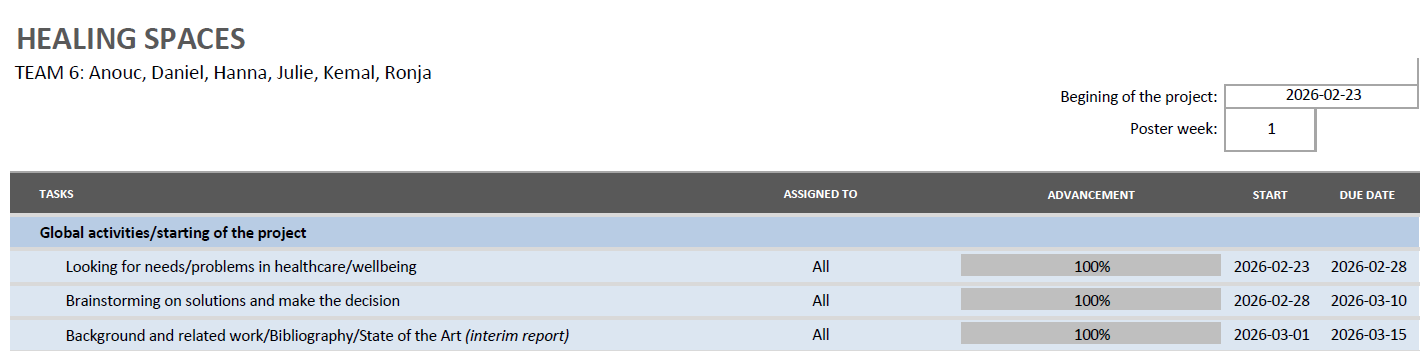
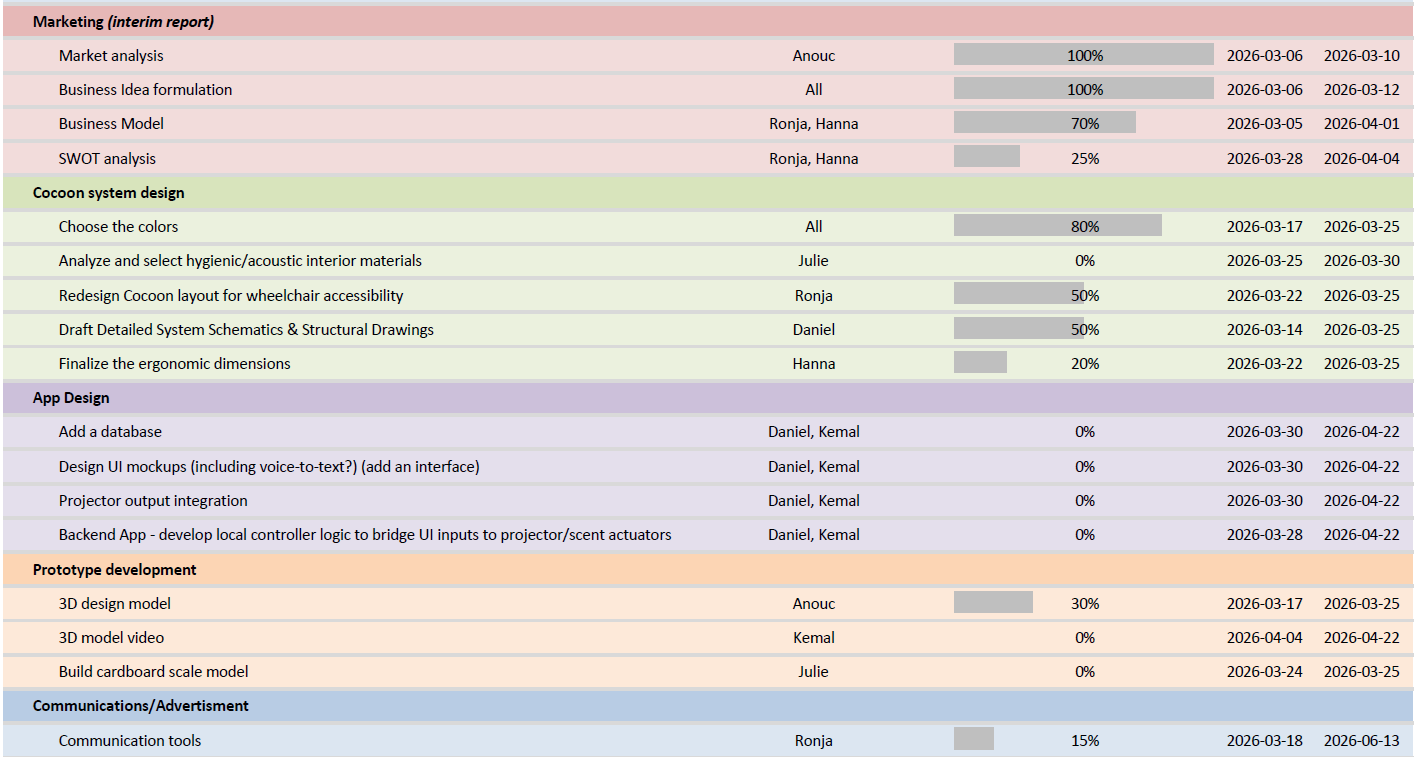
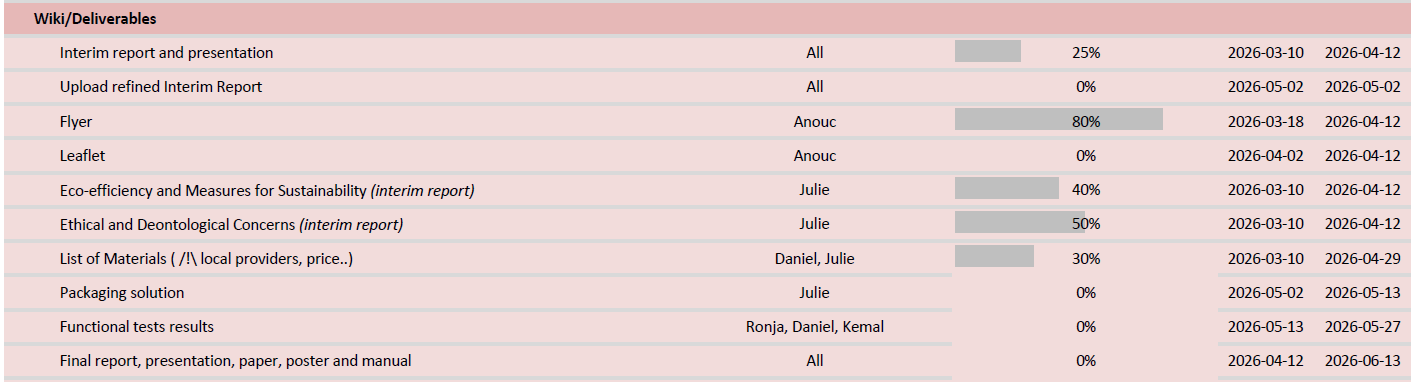
We divided the tasks according to our strengths and areas of expertise, but some compromises had to be made to meet the needs of the project's progress. For example, marketing tasks are primarily managed by Hanna and Ronja, even though their fields of study are unrelated to this topic.
Figure 9 presents the updated Gantt Chart.

Figure 10 contains the semester schedule (before the last update of the Gantt Chart for the interim report): each purple bar represents the planned time for its completion, with the start and end dates set. The gray area indicates the progress of the task, allowing us to see if we are ahead of schedule or if we still need to do more work on the task.
We observed that the beginning of the project was lengthy in terms of identifying the problem and potential solutions. Indeed, we had several different ideas, and we were only recently able to choose and focus on the final topic of our project. This required a great deal of time for reflection, discussion, and research, some of which were successful, others not. We now have to complete numerous tasks within the same timeframe, some with imminent deadlines; these are the tasks we must focus on first.

2. Sprint backlog and sprints created in Planner on Jira:
First of all, discovering and using Jira was not easy for our team. Despite the explanations that we thought we understood, some parameters and steps were not completed successfully on time, notably the timely launch of certain sprints.
Figure 11 is one of the first sprint we organized (but forgot to launch it on time).
Figure 12 is the last sprint we launched, which takes place from April 7th to 14th.
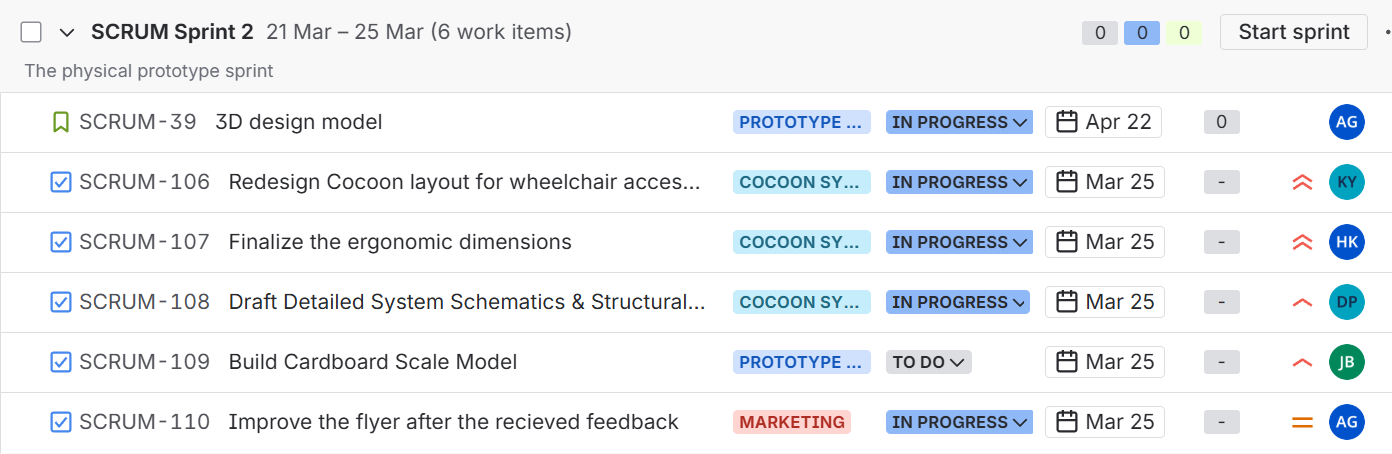
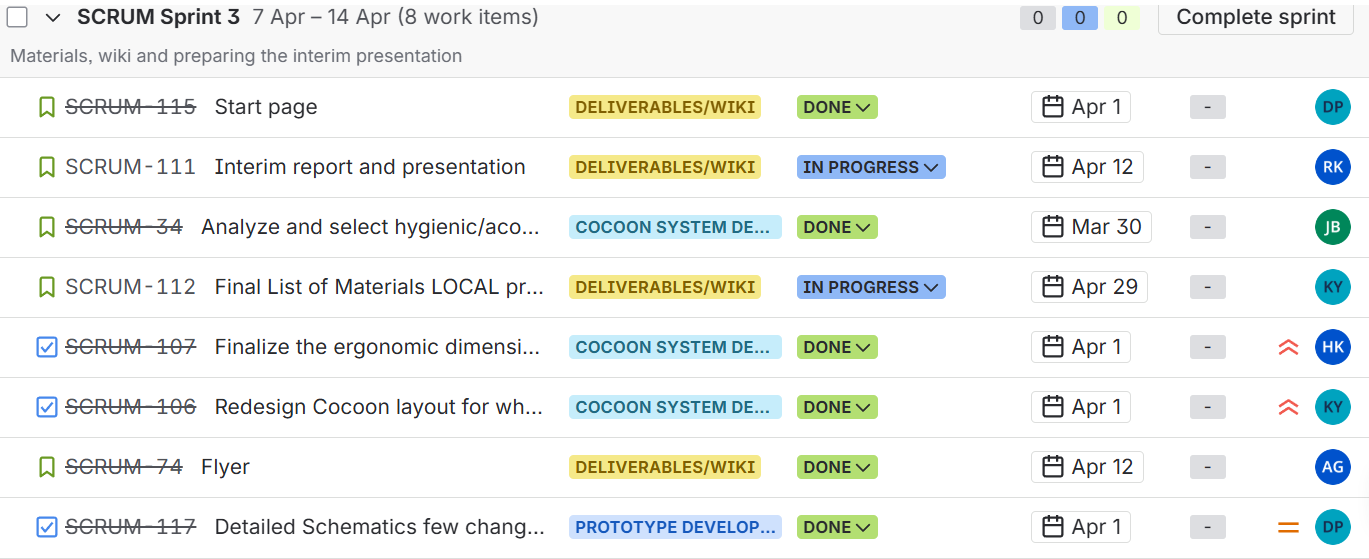
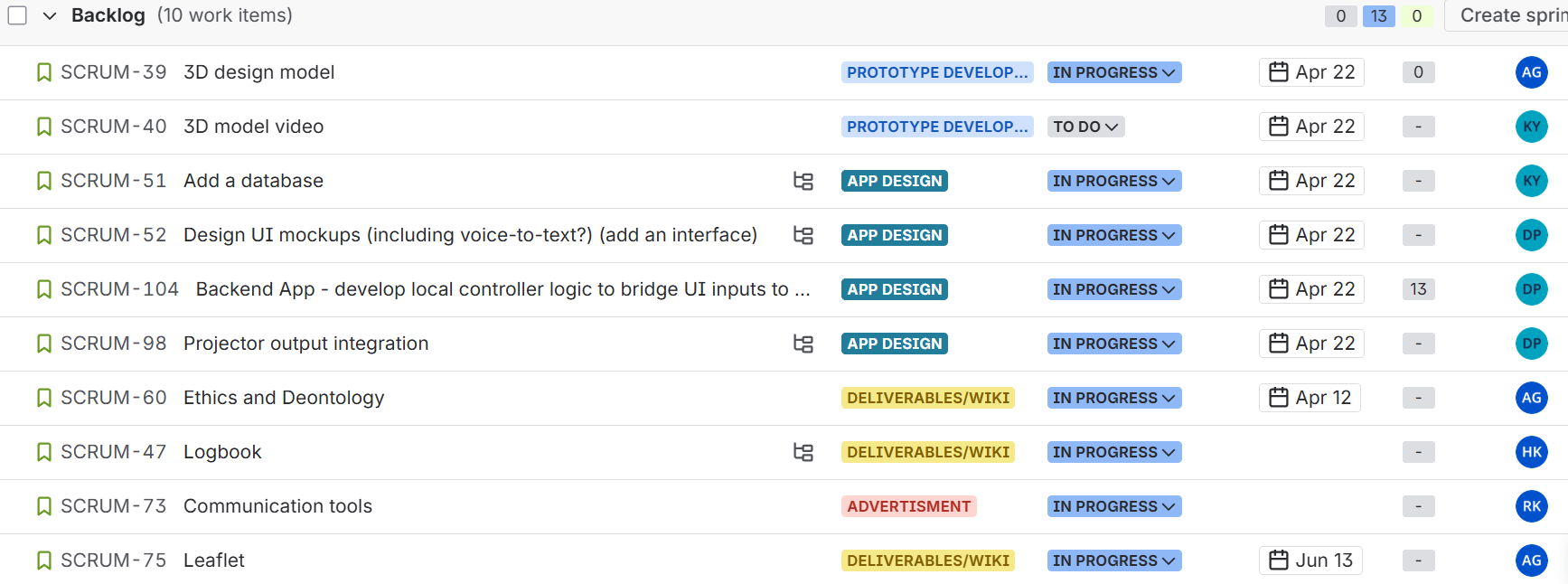
Figure 13 is the curent backlog (edited on April 9th) with tasks that still need to be completed.
3. Prioritization, estimation process and underlying challenges
We tried to prioritize tasks based on the deadlines and deliverables to respect, but it was also based on our estimated workload and the time it would take.
The tricky part was finding compromises based on each person's areas of expertise and the time the tasks could take.
Provide a summary of the sprints that were executed, along with sprint goals.
Sprint Outcomes
Include the outcomes of all sprint reviews (what was the sprint backlog, completion status, planned capacity vs. achieved velocity).
Our team took some time to get to grips with Jira properly (especially launching sprints to record them, assigning story points and managing priorities, retrospectives and dailies), so we are detailing the 3 most recent sprints here (8, 9 and 10) since they best correspond to the requests.
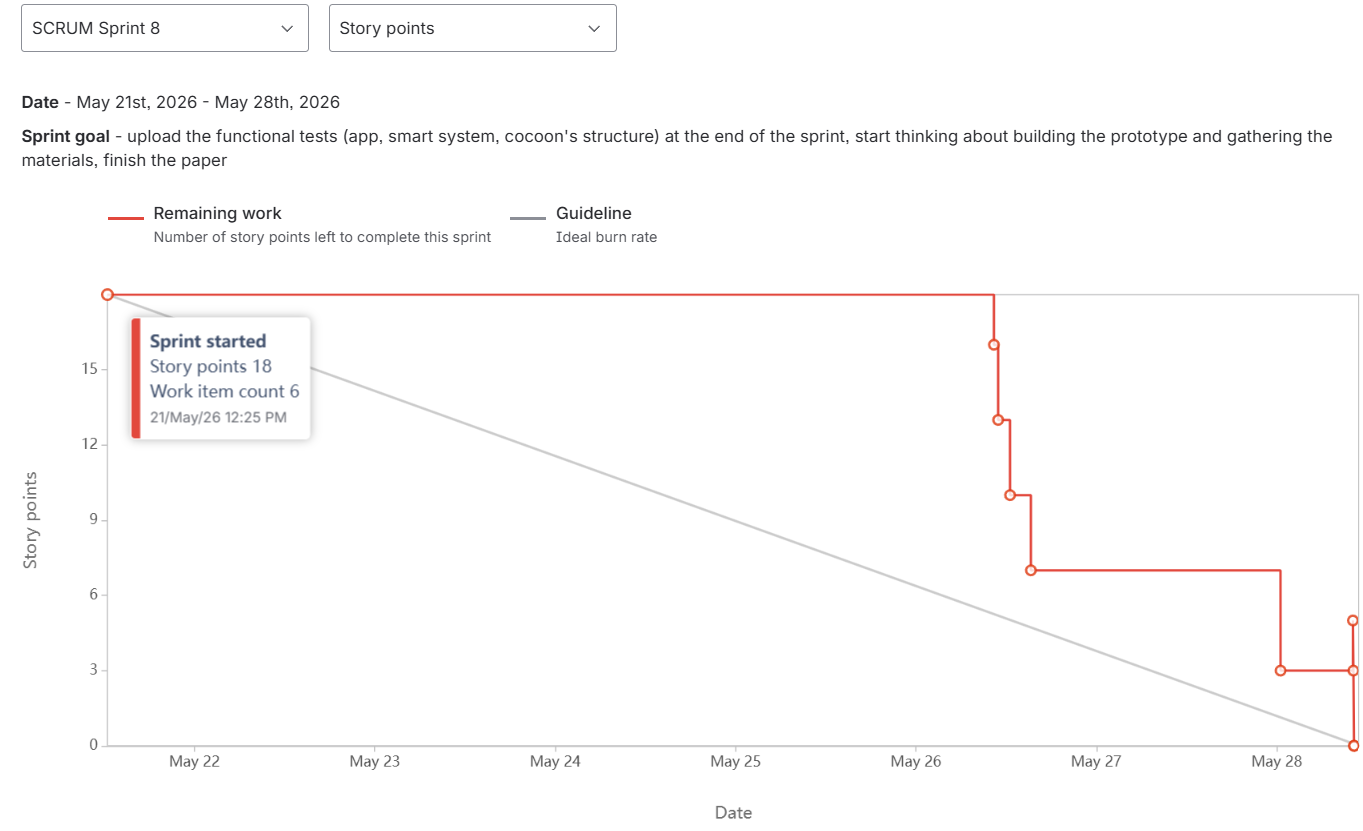
Sprint 8: May 21st - 28th 2026
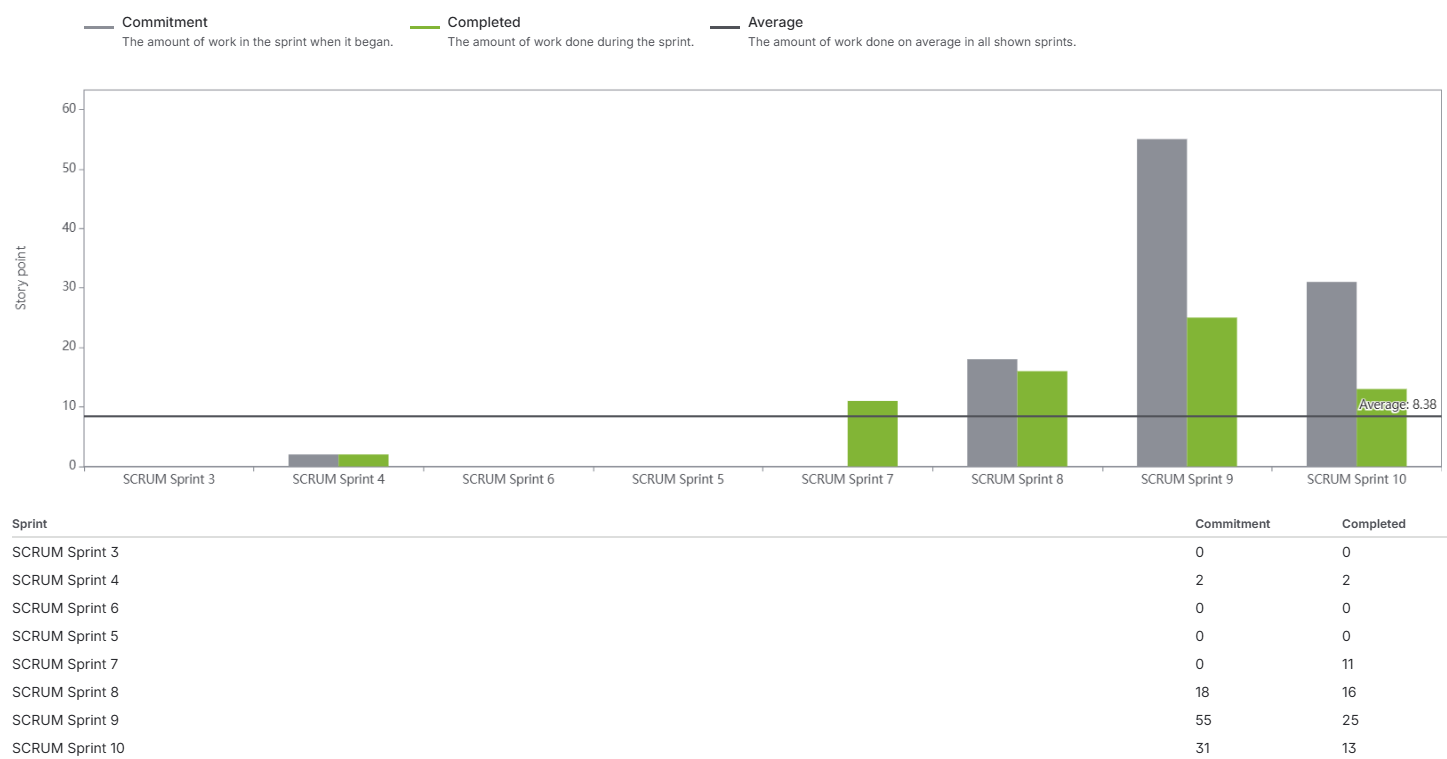
During this sprint, the team focused on uploading the functional tests on wiki (app, smart system, cocoon's structure), start thinking about building the prototype and gathering the materials, and improving the paper. Looking at Figure 14, we can see that all planned tasks were completed, and that the story point estimates were appropriate. The small spike in story points at the end of the diagram (Figure 14) indicates that we added story points to a task at the end of the sprint, and consequently, the velocity report in Figure 17 shows that 16 out of 18 story points were completed, even if all tasks were done.
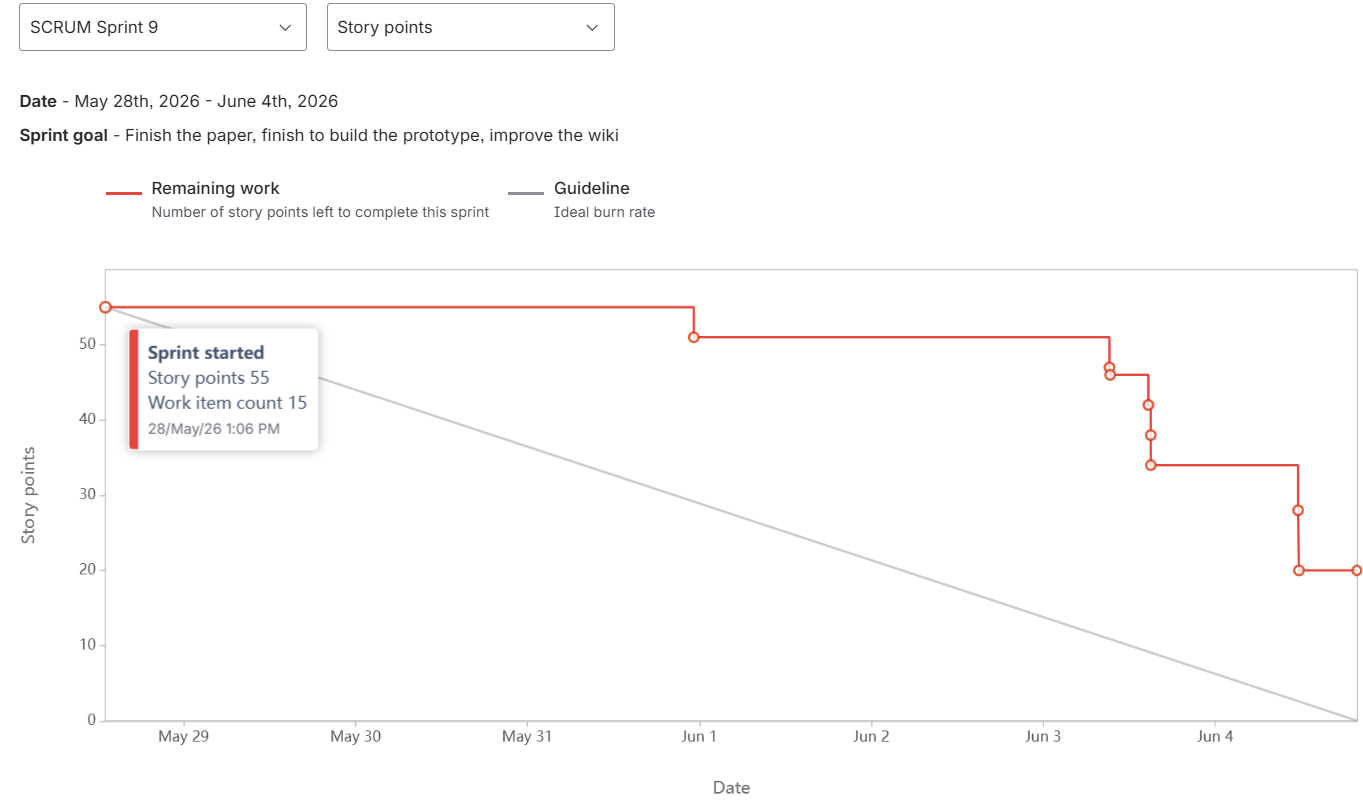
Sprint 9: May 28th - June 4th 2026
During this sprint, the team focused on finishing the paper, finishing to build the prototype, and continuing to improve the wiki.
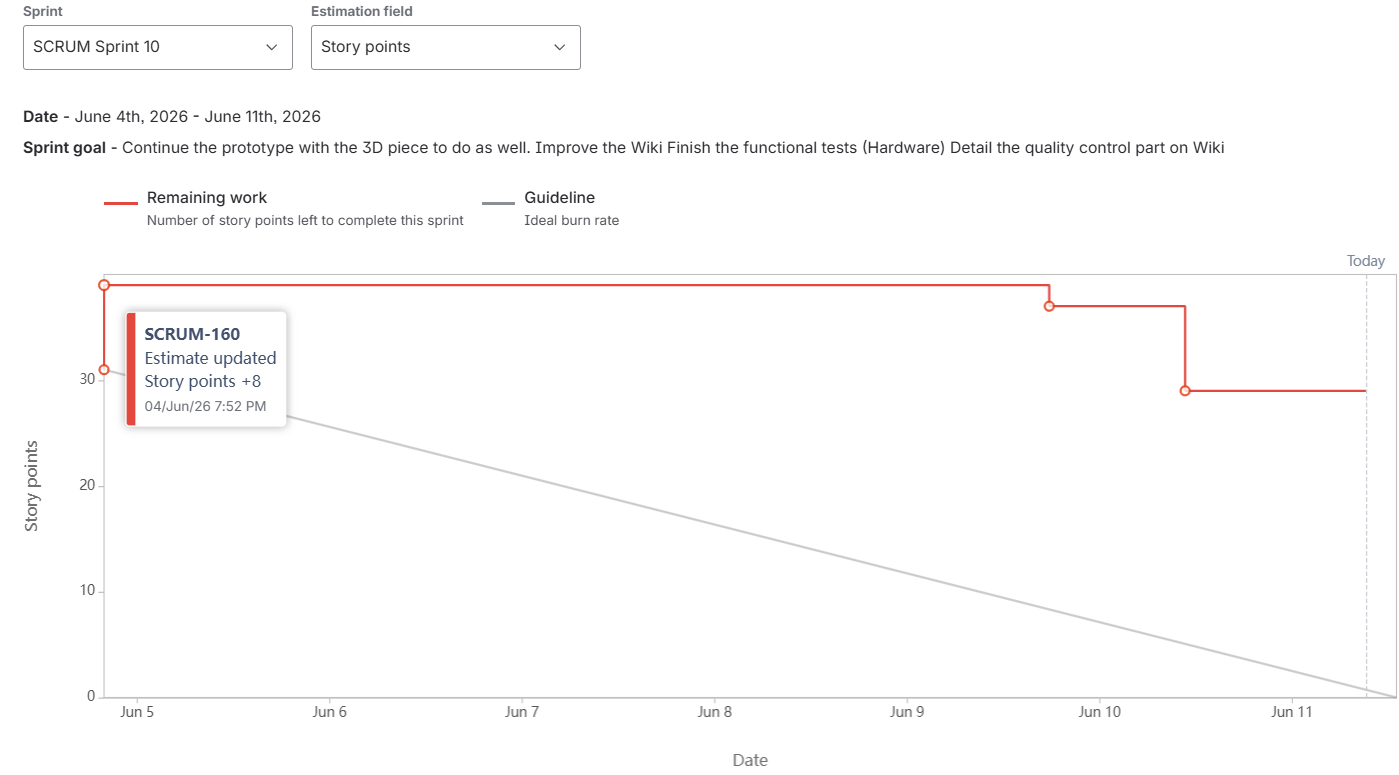
Looking at Figure 15, the diagram's appearance is quite satisfactory as it shows the fairly regular completion of tasks; however, we were unable to complete all the story points: our estimate was too high relative to our workload capacity. Having completed all the tasks and story points of the last sprint 8, we wanted to increase the number of committed story points. Having completed 25 out of 55 story points (which is more than in the last sprint, as shown in Figure 17), we now need to try to determine our story point velocity to better plan future sprints.
Sprint 10: June 4th - June 11th 2026
During this sprint, the team focused on continuing the prototype with the 3D piece to do as well. Improving the Wik, finishing the functional tests (Hardware), and finishing to detail the quality control part on Wiki.
Looking at Figure 16, the diagram's appearance is not really satisfactory as it shows, first of all, that we added story points after the sprint had already started, and that we didn't even complete half of the planned story points. This week was packed with tasks and story points. We still managed to complete the most important tasks, although only 13 out of the 31 (as shown in Figure 17).
The velocity report in Figure 17 shows the number of story points planned and completed for each sprint. It indicates an average of 8.38 completed story points, but this doesn't truly represent our actual story point completion rate. We need to average the last three sprints completed successfully. Our average story points completed is then 18 for the last three sprints. We would need to complete more sprints to obtain an average that accurately reflects our true capacity, and thus be able to properly plan task completion during sprints.
Sprint Evaluations
This section provides a retrospective analysis of each sprint, highlighting successes, challenges, and opportunities for improvement. It examines team performance, project progress, and lessons learned, with the objective of continuously improving future sprint planning and execution.
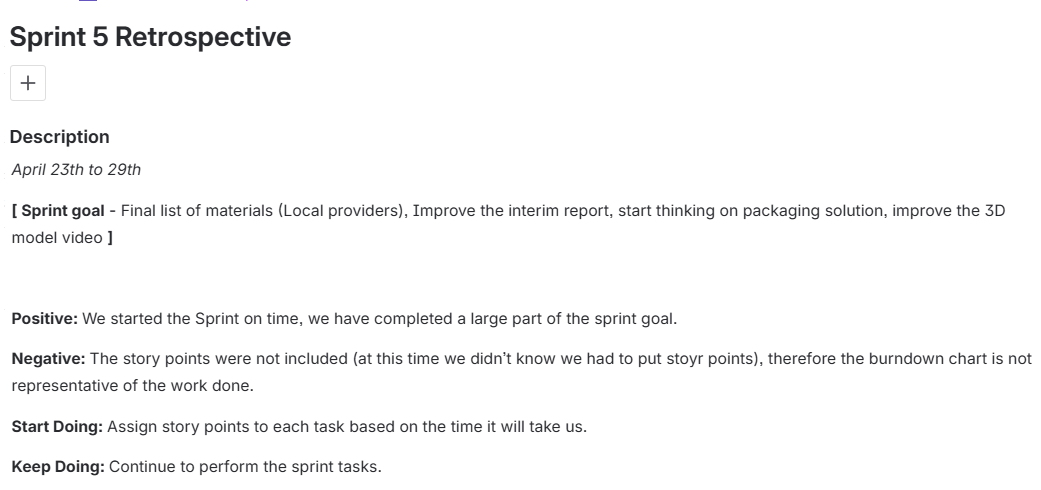
Sprint 5
Looking at Figure 18, the team successfully started the sprint on time and completed the planned tasks. This sprint marked the beginning of the transition toward a more structured Agile approach, as the team recognized the need to introduce story points and improve sprint tracking.
Sprint 6
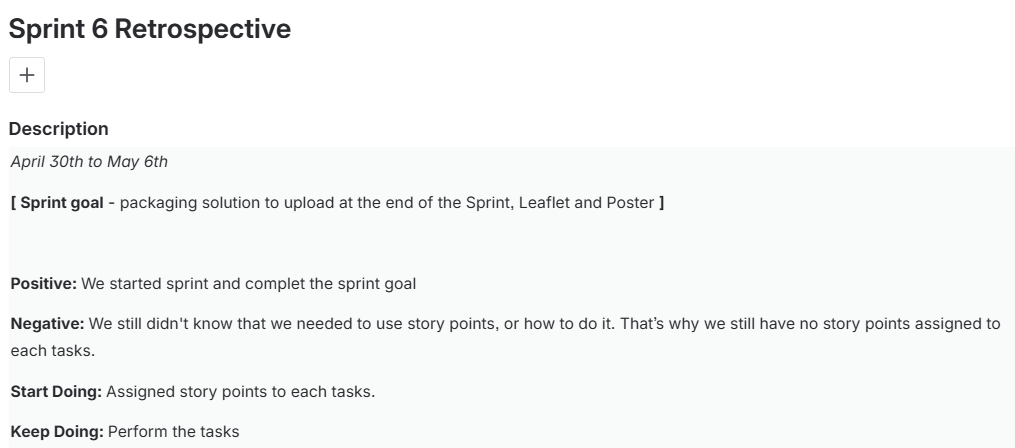
Looking at Figure 19, the team achieved most of the sprint goals and made progress on key deliverables such as documentation and testing activities. However, the retrospectives identified issues with adding story points after the sprint had already started, which reduced the accuracy of planning and the burndown chart.
Sprint 7
Looking at Figure 20, this sprint showed continued improvement in the use of story points and burndown tracking. The team delivered several planned outputs, but task progress was not always updated during the sprint, making it harder to monitor real-time performance.
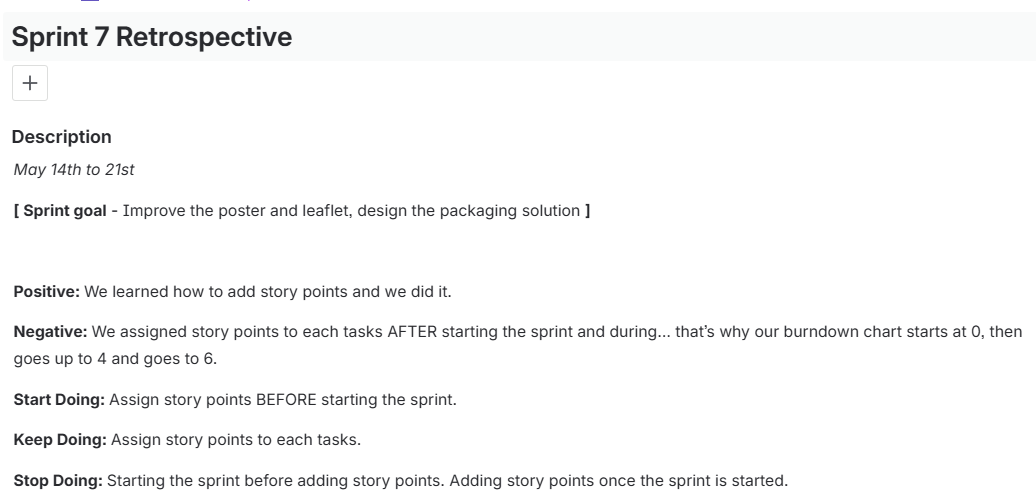
Sprint 8
Looking at Figure 21, the team made strong progress on major deliverables, including prototype-related work and communication materials. At the same time, planning accuracy remained a challenge, as the sprint workload was overestimated compared with the team’s actual capacity.
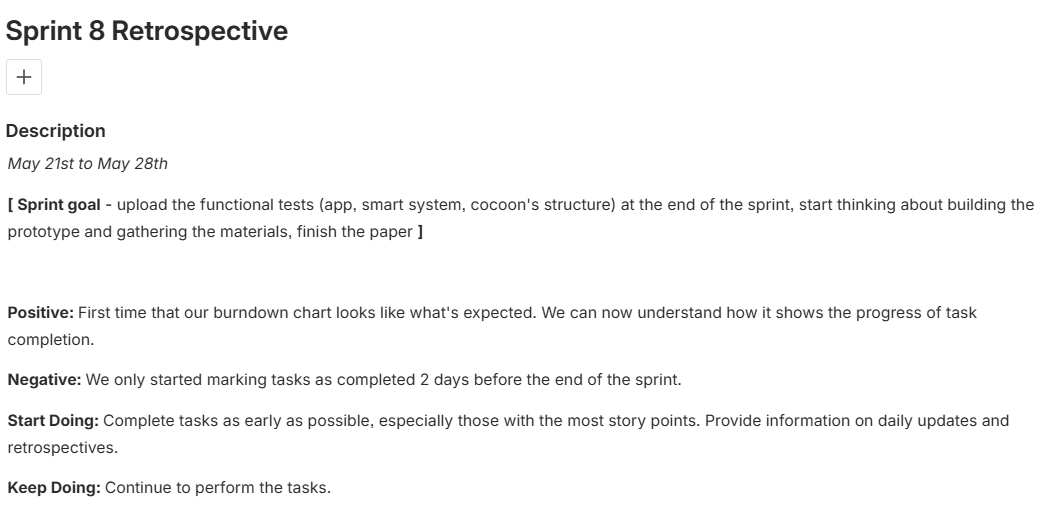
Sprint 9
Looking at Figure 22, the retrospectives highlighted better collaboration and more consistent use of Agile practices. The team continued delivering important technical results, but external dependencies and hardware constraints created delays for some tasks.
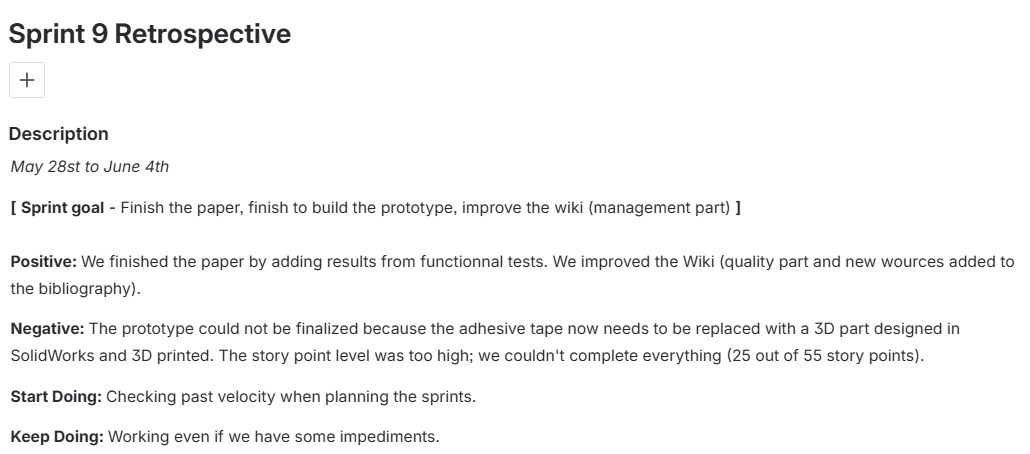
Sprint 10
Looking at Figure 23 the team successfully completed several planned tasks, including designing the 3D part in SolidWorks, improving the quality control section of the Wiki, and finalizing the project video. However, the prototype assembly was delayed because we were waiting for validation of the 3D-printed component. We also observed that adding story points after the sprint had started negatively impacted the burndown chart. For future sprints, we aim to improve our planning by using previous sprint velocity to estimate workloads more accurately while continuing to make progress despite technical constraints.
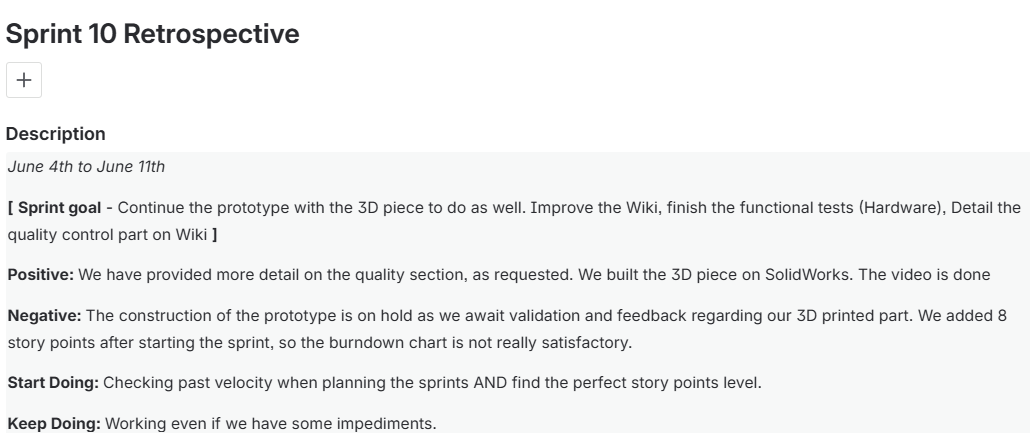
Retrospective Summary
Throughout the project, the team demonstrated a strong ability to achieve sprint objectives and continuously improve both technical deliverables and project documentation. Significant progress was made in prototype development, testing, reporting, and communication materials, while the team also showed resilience in overcoming technical challenges and external constraints.
The team successfully started the sprint on time and completed the planned tasks. This sprint marked the beginning of the transition toward a more structured Agile approach, as the team recognized the need to introduce story points and improve sprint tracking.
Summary
This chapter summarised the project management approach used for developing the Healing Cocoon prototype, a proof-of-concept designed to reduce anxiety in children in clinical waiting environments. The project scope focused on research, design, and development, organised using a Work Breakdown Structure (WBS) to structure tasks and responsibilities.
The project was managed through short, structured development cycles with weekly planning sessions and Jira task tracking, enabling steady progress and flexibility over the 15-week timeline. The project was completed within a €100 budget by prioritising low-cost materials and components while maintaining core functionality.
Quality was ensured through iterative testing, supervisor feedback, and a focus on safety, hygiene, accessibility, and reliability. Key stakeholders, including healthcare professionals, patients, supervisors, and suppliers, were considered throughout development.
Communication was maintained using WhatsApp, Microsoft Teams, Outlook, and Jira to support effective collaboration. Risks were continuously identified and mitigated, while procurement decisions balanced cost, performance, and availability.
Overall, this structured and iterative development process, supported by continuous feedback, allowed the team to deliver a functional prototype within the defined constraints of scope, time, cost, and quality.
Marketing Plan
Introduction
For European Project Semester 2026, our team is developing an idea in the Smart Health and Wellbeing domain. We want to introduce Healing Cocoon – a virtual reality cocoon for waiting rooms and other clinical spaces. Designed for children with stress and anxiety problems related to medical procedures. This marketing plan supports our technical work by proving the product's business value (crucial for commercialization of our idea). It is essential for showing that our solution solves a real market problem, is financially realistic, and can be effectively sold to pediatric healthcare facilities.
Business Idea Formulation
Healing Cocoon is an interactive, wheelchair-accessible cocoon equipped with a short-throw projector that transports pediatric patients to a calming, magical fantasy world during dentist, therapy visits. Core Features:
- Immersive, projection of animated, child-friendly fantasy worlds or similar surroundings.
- Interactive depth sensors that allow children to safely interact with the projections.
- Calming scents (e.g., lavender, sweet orange) and soft spatial audio.
Customer Needs Met:
- For the End-User (Patients & Parents): Provides emotional comfort, actively distracts from clinical environments, and significantly reduces acute fear and stress before medical treatments.
- For the Buyer (Clinics & Hospitals): Transforms a standard waiting room into a premium, family-friendly experience. By calming the child beforehand, it reduces appointment delays, improves patient cooperation during examinations, and builds brand loyalty for the practice.
Business Model
Using the Value, Velocity, Visibility, Verifiability, Virtuality, Vulnerability (6-V) Value Exchange framework [38], here is how value flows between the key actors in our targeted private clinic market:
- The Company (HealingCocoon): We create value by designing and manufacturing the physical Cocoon pods and developing an expanding software library of evidence-based sensory content (visuals, sounds, scents). In exchange, we capture value through a Business-to-Business (B2B) revenue model consisting of a direct sales/installation fee, followed by a recurring monthly subscription for software updates and fresh content carousels.
- The Customers (Pediatric Dental, Psychiatric, and Therapy Clinics): Clinic owners exchange financial capital to purchase the Cocoon. In return, they receive a cutting-edge waiting room solution that acts as a strong competitive differentiator. Furthermore, by pre-calming anxious children, clinics reduce appointment delays caused by patient distress, directly increasing their operational efficiency and patient throughput.
- The Consumers (Pediatric Patients & Parents): Patients and parents invest their time in the clinic's waiting area. Instead of exchanging that time for mounting stress, dental anxiety, or sensory overload, the Cocoon provides them with a safe, regulated environment, emotional comfort, and a positive association with their healthcare visits.
- Collaborators: We exchange value with hardware manufacturers (for short-throw projectors, audio systems, and hygienic materials), software developers, and crucial psychological/pediatric advisors who help us design evidence-based calming environments. Additionally, we collaborate with medical interior fit-out companies to seamlessly integrate the Cocoons into existing private practice floor plans.
Market Analysis
To ensure the commercial viability of the HealingSpaces Cocoon, it is essential to analyze the external forces that influence our market success. Following a thorough risk analysis regarding infection control and cross-contamination, we strategically narrowed our target market from general pediatric hospitals to specialized private practices—specifically pediatric dental, psychiatric, and therapeutic clinics. These environments experience high patient anxiety, while involving comparatively lower cross-contamination risks than high-density pediatric hospital settings. [39], [40]
The micro-environment consists of actors close to the company that affect our ability to serve our customers:
- Customers (Business Market): Our primary B2B buyers are private pediatric dental offices and child psychology/occupational therapy centers. These clinics seek competitive differentiation and higher operational efficiency by preventing appointment delays caused by distressed children.
- Competitors: Direct competitors include traditional waiting room entertainment, e.g., generic TVs, wall-mounted bead mazes, and emerging tech like VR headsets. The Cocoon holds a strategic advantage over VR by eliminating the need for wearable devices, easing hygiene maintenance between patients, and preventing total social isolation.
- Suppliers & Intermediaries: Our supply chain relies on manufacturers of short-throw projectors, depth sensors, and medical-grade, easily sanitizable textiles. We will also partner with healthcare interior design firms as intermediaries to facilitate clinic installations.
The macro-environment consists of larger societal forces that shape our business opportunities:
- Demographic & Cultural Forces: There is a growing societal awareness of neurodiversity, e.g., Autism, Attention‑Deficit/Hyperactivity Disorder (ADHD), and a strong cultural push by parents to prevent “medical trauma.” Modern parents actively seek out healthcare facilities that prioritize a child’s emotional and sensory safety.
- Economic Forces: While public healthcare systems face strict budget constraints, private dental and therapy practices operate in a highly competitive economic landscape. They are willing to invest capital into premium waiting room experiences to attract and retain higher-paying clients.
- Political & Legal Forces: By pivoting away from standard hospital waiting rooms, we bypass the strictest medical device and contagious disease regulations. However, the product must still comply with standard fire safety codes, Americans with Disabilities Act (ADA)/wheelchair accessibility standards, and basic clinical sanitation requirements.
- Technological Forces: The increasing affordability and miniaturization of short-throw projectors, Internet of Things (IoT) sensors, and directional audio make the production of a smart, interactive cocoon financially and technically feasible today.
PESTEL Factors:
To ensure the commercial viability and successful implementation of the Healing Cocoon, it is essential to understand the macro-environmental forces shaping our market. The following PESTEL analysis in Figure 24 outlines the key Political, Economic, Social, Technological, Environmental, and Legal factors influencing our strategy as we introduce our sensory pod to specialized private pediatric clinics. In strategic management literature, PESTEL analysis is widely recognized as a relevant tool for evaluating the external business environment [41]. This approach can be complemented by Porter’s work [42], which emphasizes the importance of industry structure and competitive dynamics in the development of corporate strategy.

SWOT Analysis
The SWOT analysis in Figure 25 reveals that while the Healing Cocoon requires a significant physical footprint and upfront capital investment from clinics (Weaknesses), its ability to increase daily operational efficiency and provide a superior, hygienic experience (Strengths) justifies the cost. Externally, competing against cheaper digital distractions like tablets, alongside potential clinic budget freezes, poses realistic challenges (Threats). However, our strategic pivot to specialized pediatric dentistry and therapy centers perfectly aligns with the surging demand for neurodivergent-friendly healthcare (Opportunities). Overall, by targeting high-anxiety, low-infection environments, we minimize our primary risks and establish a highly defensible B2B market position.

Strategy
Strategic Objectives
The primary strategic goal is to establish the HealingSpaces Cocoon as the premier, non-pharmacological anxiety-reduction tool for specialized pediatric care-specifically private pediatric dentistry and child therapy centers. Because we are a Business-to-Business (B2B) company, our sales targets focus on clinical adoption rather than mass consumer volume. Our measurable objectives are:
- Year 1: Secure 5 to 10 pilot installations in local private clinics to gather clinical case studies and testimonials.
- Year 3: Establish the Cocoon as a standard architectural feature in high-end, newly renovated pediatric clinics, achieving 50+ active installations regionally.
Segmentation and Targeting
Because the Cocoon operates more specifically on a Business-to-Business-to-Consumer (B2B2C) model, our targeting strategy must address two distinct groups: the clinics that purchase the product and the patients who use it.
- The Customers (The Buyers):
Specialized private practices, such as pediatric dentistry and therapy clinics. They exchange financial capital for a cutting-edge solution that provides a competitive advantage, improves patient satisfaction, and prevents costly appointment delays caused by distressed children.
- The Consumers (The End-Users):
The pediatric patients and their parents who invest their time in the waiting room. To clearly illustrate the emotional and physical needs of our target audience, we developed two primary user personas:
- Persona 1 (The Dental Patient): A 9-year-old girl waiting in a dentist's office. She is emotional, sensitive, and easily scared by clinical or medical environments. She actively avoids sensory overload and requires a calm, positive, and safe space to regulate her emotions before sitting in the dental chair.
- Persona 2 (The Therapy Patient): An 11-year-old boy in a wheelchair waiting to see a therapist. He often feels frustrated and anxious about his upcoming sessions. He needs to be comfortably accommodated without leaving his wheelchair, and he requires engaging, accessible entertainment to distract him and focus his mind on something other than the appointment.
By focusing our B2B sales efforts on the Buyers (the clinics), we directly solve the acute stress and accessibility needs of our Consumers (these patient personas). Our rollout strategy to acquire these clinics is as follows:
- Short term (0-12 months): Target 5 to 10 early-adopter pediatric dental and therapy practices in the local urban area to launch pilot programs and gather clinical case studies.
- Medium term (1-3 years): Expand market share by acquiring 50+ specialized private practices nationwide, leveraging our pilot testimonials.
- Long term (3-5 years): Establish the Cocoon as standard equipment for child-friendly practices through licensing or collaborations with major medical furniture suppliers.
Positioning
Our positioning strategy bridges the gap between delivering a premium emotional experience for our consumers (patients and parents) and providing a tangible return on investment for our customers (the clinics).
- Unique Selling Proposition (USP): The Healing Cocoon is the only fully wheelchair-accessible, multisensory waiting room environment that actively transforms pre-appointment anxiety into a calming, immersive experience—preventing emotional meltdowns and saving specialized clinics from costly scheduling delays.
- Positioning in the Market: To achieve a competitive advantage, the Cocoon is positioned in the minds of our target customers based on two key dimensions:
- Identification: We establish the Cocoon within the category of premium, medical-grade waiting room equipment. Like high-end clinic furniture, it meets strict hygiene, safety, and ADA/accessibility standards.
- Differentiation: (i) Versus Traditional Distractions (Toys/Tablets) - Instead of passive, isolated digital distraction, the Cocoon offers “active immersion” and regulates the sensory environment (visuals, sounds, calming scents) to actively soothe emotional patients (like our 9-year-old persona). (ii) Versus Wearable Tech (VR Headsets) - While VR offers high immersion, it is socially isolating, causes hygiene concerns, and is often incompatible with young or highly sensitive children. The Cocoon delivers a shared, highly hygienic 180-degree experience. (iii) Unlike fixed play structures, the Cocoon's physical footprint is explicitly designed for barrier-free entry, ensuring patients in wheelchairs (like our 11-year-old persona) can independently enjoy the full experience without frustration.
Marketing-Mix
To successfully implement our strategy and deliver our Unique Selling Proposition to specialized private clinics, we have aligned the traditional 4Ps with the customer-centric 4Cs framework:
Product & Customer Value
Product: The Healing Cocoon is a multi-sensory, semi-enclosed relaxation pod. It features a 180-degree short-throw projector, spatial audio, and an integrated scent system. The physical design is barrier-free and 100 % wheelchair accessible, ensuring inclusivity.
Customer Value: For the clinic, it provides a functional competitive advantage by preventing appointment delays caused by distressed children. For the consumers (like our personas - the highly sensitive 9-year-old girl and the 11-year-old boy in a wheelchair), it offers emotional safety, distraction, and a fear-free waiting experience.
Price & Cost
- Price (The Revenue Model): We utilize a premium, two-tiered “razor and blades” pricing strategy.
Upfront Hardware: A one-time purchase price of 2000 € – 2500 € for the physical pod and installation.
Recurring Subscription: A monthly fee of 9.99 € – 19.99 € for software updates, new interactive environments, and fresh scent cartridges.
- Cost (The Customer's Investment): From the clinic's perspective, the “cost” includes the financial purchase and ongoing maintenance. However, this is heavily offset by the perceived Return on Investment (ROI): higher patient throughput, better online reviews from relieved parents, and increased patient loyalty.
Place & Convenience
- Place (Distribution): Sales are strictly B2B. We target private pediatric dental practices, child psychology clinics, and occupational therapy centers. Distribution is handled via direct sales and strategic partnerships with medical interior design firms and healthcare equipment suppliers.
- Convenience (Ease of Use): The Cocoon is designed for seamless integration into existing waiting rooms with a highly efficient footprint (165 cm x 110 cm). It is “plug-and-play” and self-explanatory for children to use. Crucially, the smooth, projector-based interior is incredibly convenient for clinic staff to sanitize quickly between patients.
Promotion & Communication
- Promotion (The Tactics): Our primary B2B marketing channels include presentations at dental and therapeutic trade fairs, highly targeted LinkedIn/online marketing aimed at clinic directors, and leveraging video testimonials from our local pilot installations.
- Communication (The Dialogue): Our core message to clinics is: “Transform your waiting room into a calm, efficient, and inclusive experience.” Communication will focus on building clinical trust by highlighting the evidence-based emotional impact on children and the operational stress reduction for medical staff.
Brand
The name of the product is Healing Cocoon. We chose this name because it represents the idea of creating a safe and calming space where children can relax and feel protected. The concept is inspired by a cocoon, where a caterpillar transforms into a butterfly. In the same way, children enter the cocoon feeling anxious or stressed, and leave feeling calmer and more at ease.
Logo
The logo shown in the Figure 26 is based on the idea of a cocoon and a butterfly combined into one shape. It represents both protection and transformation. The soft and flowing lines give a feeling of calmness and safety, while the butterfly shape symbolizes freedom and positive change. In the center, there is a small star-like shape which represents a moment of relief or comfort. This reflects the main goal of the product, which is to reduce anxiety and create a more positive experience.

Color Palette
The color palette shown in the Figure 27 is based on calm and soft colors that support relaxation:
- Green represents healing and nature.
- Blue represents trust and calmness.
- Purple represents imagination and emotional comfort.

The colors are often used in gradients, which helps create a smooth and soft transition between them. This also reflects the idea of going from stress to relaxation.
Marketing Programmmes
Programmes
To successfully implement our B2B go-to-market strategy, we have defined four specific, actionable promotional programs:
- Direct Sales: Addressing private medical and dental practices via presentations at industry trade fairs, dental congresses, and targeted B2B mailing lists.
- Online store & Website: Developing a professional digital presence to host product information, 3D renders, clinical testimonials, and an easy B2B ordering portal.
- B2B Collaborations: Establishing strategic distribution partnerships with established medical practice equipment shops and healthcare furniture suppliers.
- Pilot Programs: Deploying free test installations in selected local practices (e.g., pediatric dentists) to collect clinical experience reports, usage data, and video testimonials.
Budget
The Healing Cocoon is positioned as a high-end experience for children. Our financial returns are driven by a “razor and blades” revenue model:
- One-time purchase: 2000 € – 2500 € for the physical hardware setup (including the pod, projector, spatial audio, and initial scent cartridges).
- Subscription model: 9.99 € – 19.99 € per month for ongoing software updates, new digital projection environments, and fresh fragrance carousels.
Control
To ensure our marketing efforts yield a positive Return on Marketing Investment (ROMI), we will monitor the following Key Performance Indicators (KPIs):
- Sales figures: Tracking the number of Cocoon systems sold and analyzing quarter-over-quarter sales growth.
- Customer satisfaction: Conducting short surveys with clinic staff and parents to evaluate their stress reduction, alongside feedback from doctors.
- Cocoon usage metrics: Observing the frequency of use in the waiting room and analyzing software data to determine the most popular projection environments and sounds.
- Marketing performance: Tracking website analytics, B2B lead generation (inquiries from practices), and evaluating the success rate of trade fair contacts.
- Economic control: Continuously comparing marketing expenditure against generated revenue to calculate overall ROMI.
Summary
Our preliminary marketing analysis suggests that the Healing Cocoon has strong potential to be a viable project based on our Optimal Value Proposition. If our upcoming pilot phase is successful, we anticipate the Cocoon will provide a fear-free experience for the consumer (child and parent), help mitigate costly scheduling delays for the customer (the clinic), and establish a foundation for a recurring revenue stream for the company.
Based on this market and economic analysis, the team decided to create a wheelchair-accessible, multi-sensory waiting room pod intended for private pediatric dentistry and child therapy clinics. We targeted this specific market niche because these environments experience high daily patient anxiety and have a surging demand for neurodivergent-friendly spaces, yet they avoid the strict cross-contamination regulatory barriers found in general hospitals, allowing for faster B2B adoption and high ROI.
Consequently, the team decided to design a solution with the following features added specifically for market reasons: a highly hygienic, wipeable hard-shell interior (as a market advantage over hard-to-clean VR headsets), strict physical dimensions to fit standard clinic waiting rooms, a barrier-free entryway for inclusivity, and a “razor and blades” subscription model for software and scent cartridges to ensure long-term profitability.
While the economic viability of the Healing Cocoon is clear, producing a premium hardware device requires physical manufacturing, electronic components, and material sourcing. To ensure our product is not only economically viable but also environmentally responsible, the next chapter will detail the Eco-efficiency Measures for Sustainability integrated into our structural design and product lifecycle planning.
Eco-efficiency Measures for Sustainability
Eco-efficiency is defined as the delivery of cost-effective products and services that meet human needs and improve quality of life, while progressively reducing ecological impacts and resource use throughout their life cycle, aligning with the earth's carrying capacity. It emphasizes efficient use of materials and energy to achieve profitability and value addition.
Introduction
First of all, eco-efficiency is about designing products that reduce environmental impact while still meeting people’s needs. In this project, the cocoon is designed to help reduce children’s anxiety in waiting rooms through calming scents, visuals, and sounds, while also being accessible (including wheelchair access) and hygienic
Because this is a healthcare-related environment, sustainability is not only about the environment but also about well-being and safety. Research [43] shows that the design of spaces, including sound, light, and sensory elements, can have a strong impact on stress and anxiety levels, especially in children.
Environmental
From an environmental point of view, the main focus is on the materials used and their impact. There are several aspects about it:
- Recycling
- Reducing
- Re-using
When it comes to the product, it is essential to limit its harmful impact on the environment. This can be done by cutting down, reusing, and recycling raw materials, considering energy use throughout every stage of the project, and reducing transportation as much as possible.
Regarding our project: The cocoon uses aluminium and brass, which are good choices in terms of sustainability because they are very durable and highly recyclable. Aluminium, especially, can be recycled many times without losing quality, which fits well with circular design principles.
However, materials like acoustic foam can be problematic because they are often made from petroleum-based products and can release harmful emissions like Volatile Organic Compounds (VOCs). According to studies [44] and [45], more sustainable alternatives include recycled textile-based acoustic panels or Polyethylene Terephthalate (PET) felt, which can achieve similar acoustic performance with lower environmental impact.
The antimicrobial technical textile is important for hygiene, but it’s also important to make sure it has low chemical emissions and is safe for indoor air quality, especially since children are more sensitive to pollutants.
Another important aspect of the project’s sustainability is the decision to work with Portuguese suppliers. By sourcing materials locally, the environmental impact related to transportation can be reduced, especially in terms of CO2 emissions from long-distance shipping. Research in sustainable supply chains [46] shows that transport distance is directly linked to carbon emissions, and reducing this distance is an effective way to lower the overall environmental impact of a product.
In addition, transportation is a major contributor to global greenhouse gas emissions, with the transport sector accounting for a significant share of energy-related emissions [47].
By working with local suppliers, the project can therefore reduce transport distances and associated emissions. At the same time, this approach supports the local economy, allows for shorter delivery times, and improves communication and quality control. For this project, materials such as aluminium, technical textiles, and acoustic solutions should, whenever possible, be sourced from suppliers based in Portugal.
Economical
The economic aspect of sustainability focuses on creating long-term economic growth, profitability, and stability without harming environmental or social systems. It ensures businesses remain viable while operating ethically, using resources efficiently, and fostering innovation.
This aspect can be an issue because it is often the most challenging, as it is closely tied to political perspectives, influencing views on what is considered economically viable, as well as the potential impact on businesses, employment, and job opportunities.
It is important to offer incentives that motivate companies to go beyond legal requirements and follow sustainable practices. At the same time, individuals should be encouraged to contribute in whatever ways they can, whenever possible.
Social
The social aspect is actually one of the most important parts of this project.
The cocoon is designed to create a safe and calming space for children, helping to reduce anxiety while they wait.
Accessibility is also key. By including wheelchair access, the design becomes more inclusive and usable for a wider range of children, which is an important part of sustainable design.
The use of non-toxic and antimicrobial materials also improves safety, especially for children who may be more vulnerable to infections or poor air quality.
Additionally, reducing noise and stress doesn’t just help patients—it can also improve the experience for parents and healthcare staff, making the whole environment more comfortable.
Life Cycle Analysis
Looking at the full life cycle of the cocoon helps understand its overall impact.
Here are the different phases:
- Materials: Aluminium and brass require a lot of energy to produce, but they can be recycled, which reduces long-term impact. Textiles and acoustic materials could be improved by using recycled or bio-based options.
- Production: The cocoon is designed with a structure using aluminium bows and brass panels. Prefabricated parts reduce manufacturing waste and energy use, and assembling the cocoon on-site is more efficient than building it from scratch. Choosing low-energy manufacturing processes for metal bending, panel cutting, and textile finishing can also make a difference.
- Transport: Transporting materials can contribute significantly to the product’s carbon footprint, especially for heavy or bulky items like brass panels or acoustic boards. By sourcing materials from Portuguese suppliers (F. Marques da Silva S.A. [48], [49], Artnovion [50], Monteiro Fabrics [51], we can reduce transport distances, which lowers CO2 emissions, shortens delivery times, and simplifies logistics. Using local suppliers also supports the local economy and makes communication and quality control easier.
- Use: The cocoon is designed to last a long time, thanks to durable metals and textiles. Low maintenance requirements (especially with antimicrobial textiles) reduce environmental and economic costs during use. Additionally, by providing calming sounds and visuals, the cocoon helps reduce stress in children, which is a social benefit not usually quantified in LCA but is an important part of its life-cycle value.
- End-of-life: The design allows for disassembly and recycling. Aluminium and brass can be fully recycled, while textiles and acoustic materials could be reused or repurposed if chosen carefully. Designing for end-of-life reduces waste and supports circular economy principles. Choosing more recyclable or bio-based materials further improves sustainability.
Summary
The LCA shows that the main impacts are in material production and transportation, while the use and end-of-life phases have lower environmental burdens if the materials are durable and recyclable. By choosing local suppliers, modular construction, and sustainable materials, the cocoon project maximizes eco-efficiency while still being functional, safe, and calming for children.
Ethical and Deontological Concerns
Introduction
Ethics plays a central role in engineering design, ensuring that technological solutions contribute positively to society while avoiding harm. In a context where technological developments and professional responsibilities are constantly evolving, ethical and deontological issues have become essential in guiding decision-making and professional conduct. Beyond technical skills, engineers are expected to act in accordance with moral principles, legal frameworks, and the broader interests of society.
This is especially important in healthcare environments, where user safety, well-being, and trust are critical. This chapter examines the ethical and deontological aspects of the multisensory cocoon concept, designed to improve patient experience through immersive projection technology.
The analysis is based on engineering ethics principles and sustainable development frameworks. Key topics include engineering ethics, ethical considerations in sales and communication, environmental responsibility, and liability. Special attention is given to user well-being, sustainability, accessibility, and safety. Finally, this chapter also connects ethical considerations to the Life Cycle Assessment (LCA) and Design for Sustainability (D4S) approach used in the project.
Engineering Ethics
Engineering ethics is part of business and corporate ethics and focuses on the responsibilities of engineers toward society, the profession, and stakeholders. Engineers must ensure that their work contributes positively to people and the environment, while minimizing risks and harm.
According to principles of sustainable engineering, engineers must aim to maximize positive impact and minimize negative impact on both people and the environment [52]. This is especially relevant in healthcare-related projects, where user safety and well-being are critical.
For this project, the following ethical duties are particularly relevant:
- Duties to the profession: The team must ensure that the design is safe, reliable, and based on sound engineering principles. The system should not create additional risks for patients or healthcare staff.
- Duties to the community: The solution aims to improve patient well-being by reducing stress and anxiety. This aligns with the ethical responsibility to contribute positively to society.
- Duties to the employer/client: The design must be feasible, realistic, and aligned with healthcare needs and constraints. It should provide real value and not just a conceptual benefit.
- Duties to colleagues: The project requires collaboration across disciplines (design, healthcare, technology). Ethical behavior includes clear communication, respect, and shared responsibility.
Sales and Marketing Ethics
The marketing approach for the multisensory cocoon concept is based on ethical principles of honesty, transparency, and responsibility [53]. As the system is designed to improve patient well-being, it is essential to communicate its benefits without exaggeration or misleading claims.
While immersive environments have been shown to reduce stress and anxiety, it would be unethical to present the solution as a guaranteed medical outcome without sufficient scientific evidence. Therefore, the concept is positioned as a supportive tool that enhances the patient experience, rather than a replacement for medical treatment.
The communication strategy focuses on clearly presenting both the strengths and limitations of the system. By providing accurate and realistic information, the design builds trust between designers, healthcare professionals, and patients. This approach ensures that expectations remain aligned with the actual capabilities of the product, while maintaining ethical integrity in a healthcare context.
Environmental Ethics
Environmental responsibility plays a key role in the development of the multisensory cocoon concept. In line with principles of sustainable engineering, the design aims to balance environmental, social, and economic aspects throughout the product’s life cycle [54].
A major environmental consideration within this project is energy consumption. The system relies on components such as projectors, sensors, and potentially a small Heating, Ventilation and Air Conditioning (HVAC) system, which together contribute to the overall environmental impact during the use phase. Based on the Life Cycle Assessment (LCA), this phase represents the most significant environmental burden. Therefore, reducing energy consumption is a primary design focus, for example by selecting energy-efficient components and minimizing unnecessary system activity.
Material selection is another important aspect of environmental ethics. The cocoon structure is primarily based on materials such as aluminum, which is durable and recyclable, combined with functional materials like technical Polyethylene Terephthalate (PVC) and foam. While some of these materials have environmental drawbacks, they are chosen for their performance and longevity. By prioritizing durability, the design reduces the need for frequent replacement and therefore minimizes waste over time.
In addition, the project considers the end-of-life phase of the product. The cocoon is designed with disassembly in mind, allowing different materials and components to be separated and recycled more easily. This approach helps to reduce electronic waste and supports a more circular use of resources.
Overall, the environmental strategy of the project follows a life-cycle approach (“cradle-to-grave”), ensuring that environmental impact is considered at every stage of the design. By combining energy efficiency, responsible material selection, and end-of-life considerations, the cocoon concept contributes to a more sustainable and ethically responsible healthcare solution.
Liability
Liability refers to the responsibility engineers have for the safety, reliability, and legal compliance of their product. In healthcare-related applications, this responsibility is especially important, as failures can directly impact patient safety and well-being.
For the multisensory cocoon concept, several potential risks must be carefully considered. These include electrical hazards related to components such as projectors, sensors, and wiring, as well as fire risks associated with electronic systems in a semi-enclosed environment. In addition, physical safety plays a key role, as the structure must remain stable and accessible for all users, including patients with reduced mobility.
To minimize these risks, the design follows established safety principles and regulations. Electrical components are intended to operate at low voltage where possible and must be safely enclosed to prevent user contact. The structural design is developed to ensure stability and safe use, while also allowing easy and secure access. Clear instructions for use and maintenance are necessary to prevent misuse and ensure correct operation.
Compliance with relevant European regulations is essential to ensure legal safety and product reliability. These include directives such as the Machinery Directive, Low Voltage Directive (LVD), EMC Directive, and RoHS Directive. By adhering to these standards, the product can meet the requirements for CE marking and be safely implemented in healthcare environments [55]. Failure to address these safety and regulatory aspects could result in harm to patients, damage to property, and legal consequences. Therefore, liability considerations play a crucial role in guiding the design toward a safe, reliable, and responsible solution.
Summary
The multisensory cocoon concept integrates ethical, environmental, and legal considerations throughout the design process. The project focuses on improving patient well-being by creating a safe, non-invasive, and supportive environment.
Environmental responsibility is addressed through a life-cycle approach, with attention to energy consumption, material use, and end-of-life. Insights from the LCA led to a focus on energy efficiency, supported by Design for Sustainability (D4S) strategies.
Marketing is based on transparency, presenting the cocoon as a supportive tool rather than a medical solution. In addition, the design considers relevant EU directives to ensure safety and compliance.
Overall, the project demonstrates how technology can be designed responsibly by balancing user needs, environmental impact, and legal requirements.
The following chapter presents the project development and final design.
Project Development
Introduction
This chapter contains our project's evolution, in particular, you can find currently the concept, designs, smart system, structure and also the materials chosen for the Healing Cocoon.
Ideation
The idea of the Healing Cocoon came to us after reflection and several brainstorming sessions. First, we tried to recall events we had experienced and heard about in the fields of health and well-being. We quickly focused on the impact of the medical environment (hospitals or waiting rooms) and agreed to work on a solution to improve experiences in medical settings.
Concept
The concept of the Healing Cocoon is to transform clinical environments into calming and immersive spaces.
By combining light, sound and scent, it helps reduce stress and improve children well-being.
The features of our Healing Cocoon:
- Calming audio and scent stimulation
- Immersive 180° visual environment
- Accessibilty for children in wheelchairs
Design
Structure
- Initial structural drafts and materials details – Figure 28 shows the rigid metal structure made of aluminium arches (this material was chosen because it is less expensive than brass and easy to work with.). In red, we drew the brass panels that will be attached to the metal structure (the exterior surface of the panels will be brushed to make the outside of the cocoon less metallic and more welcoming).

Figure 28: Metallic structure and external part of the cocoon with corresponding materials Figure 29 shows the internal part and the materials: first, the acoustic panels are fixed using the aluminum structure. Then, the antimicrobial fabric is attached to these panels (using adhesive or the self-adhesive properties of the acoustic panels).

Figure 29: Internal part of the cocoon with corresponding materials - Material selection – Figure 30 shows the different layers of our cocoon's structure. The air gap is due to the presence of the arched metallic structure in certain area of the cocoon, as shown in Figure 28. We have compiled a list of Portuguese suppliers who could meet our needs: (i) F.Marques da Silva S.A for the brass panels [56] and the aluminum structure [57]; and (ii) artnovion for the acoustic panels [58]. We are still thinking about the antimicrobial textil we want to use, but Monteiro Fabrics with its MEDIFLEX collection offers interesting possibilities [59]
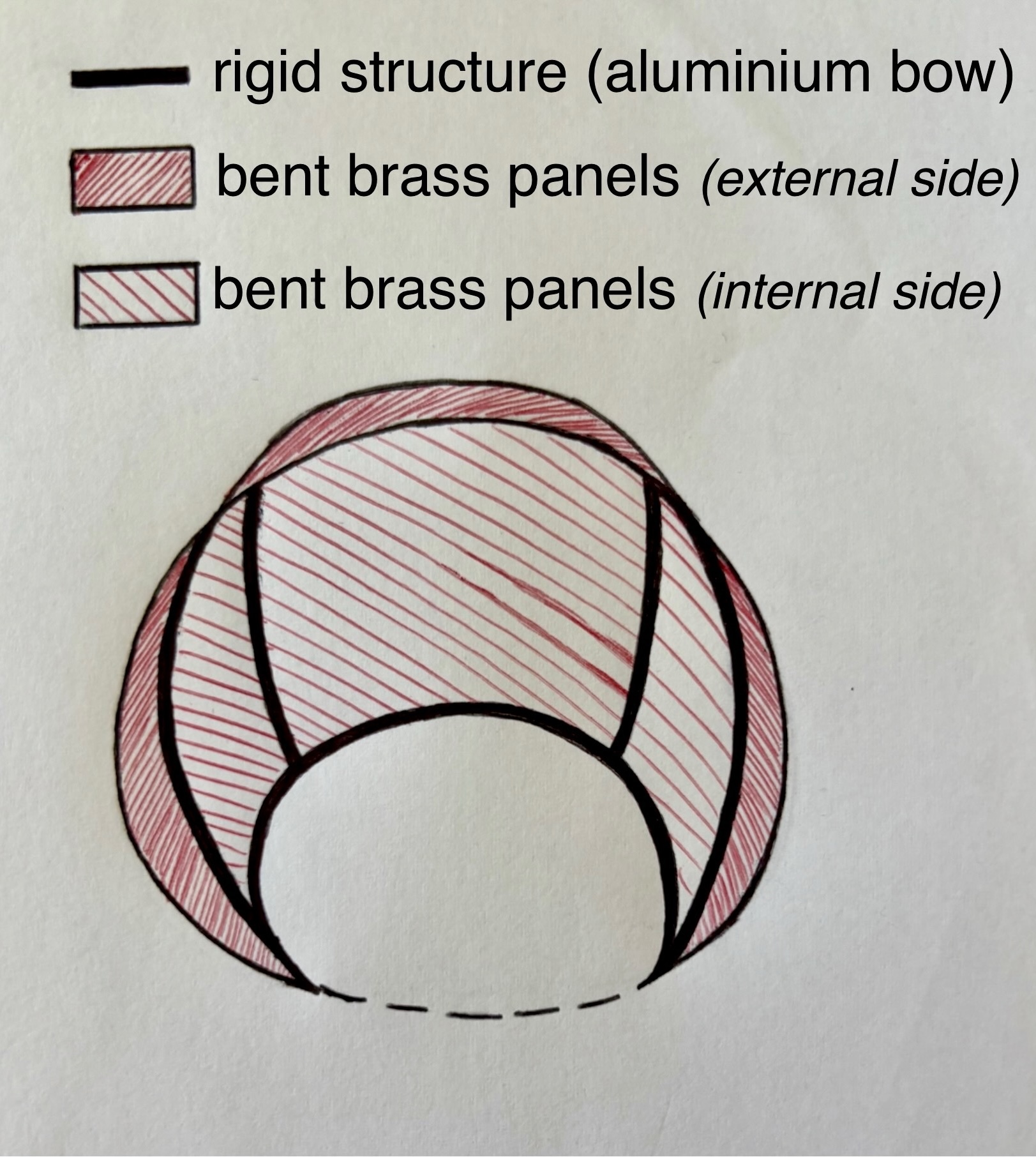
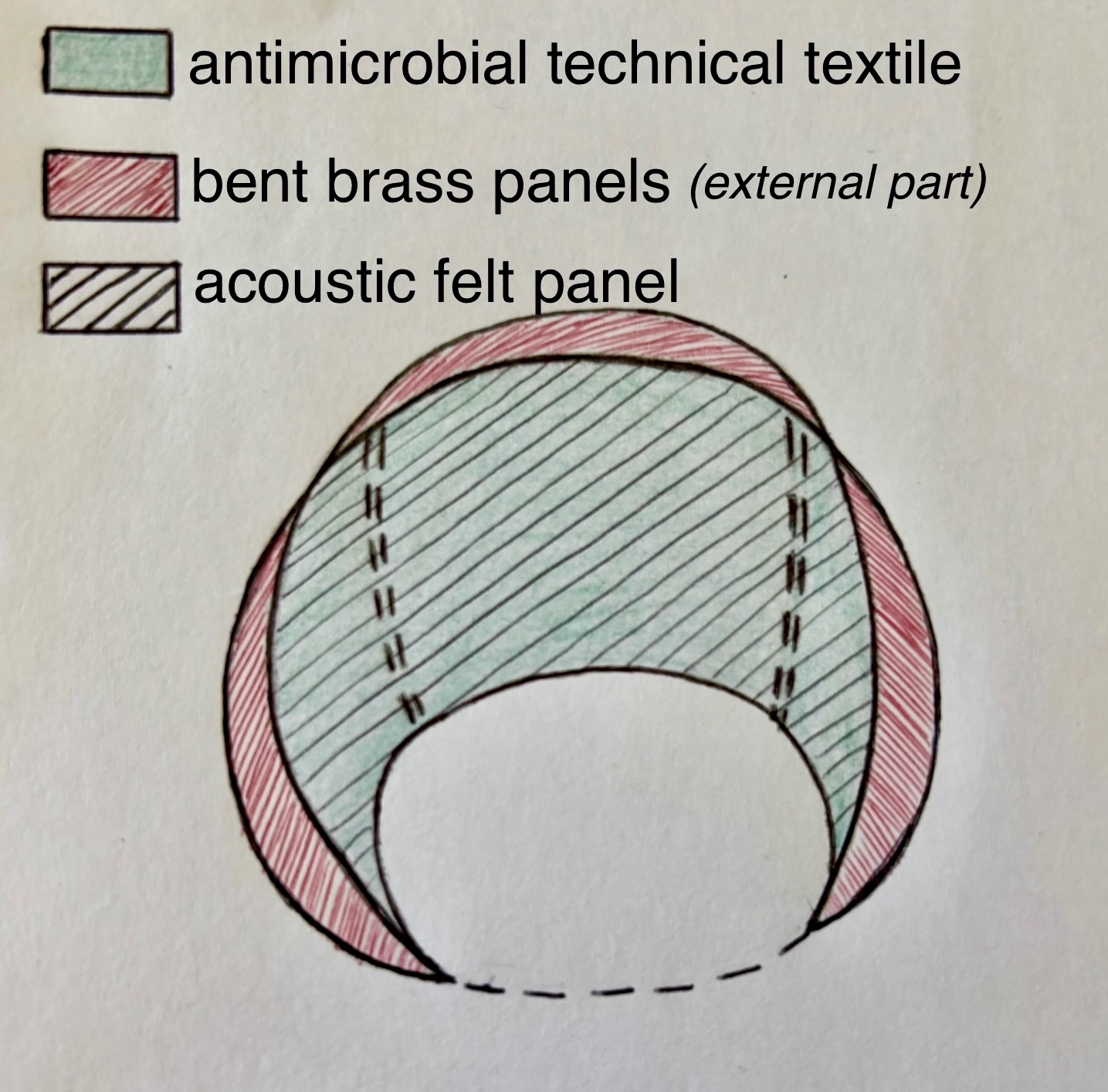
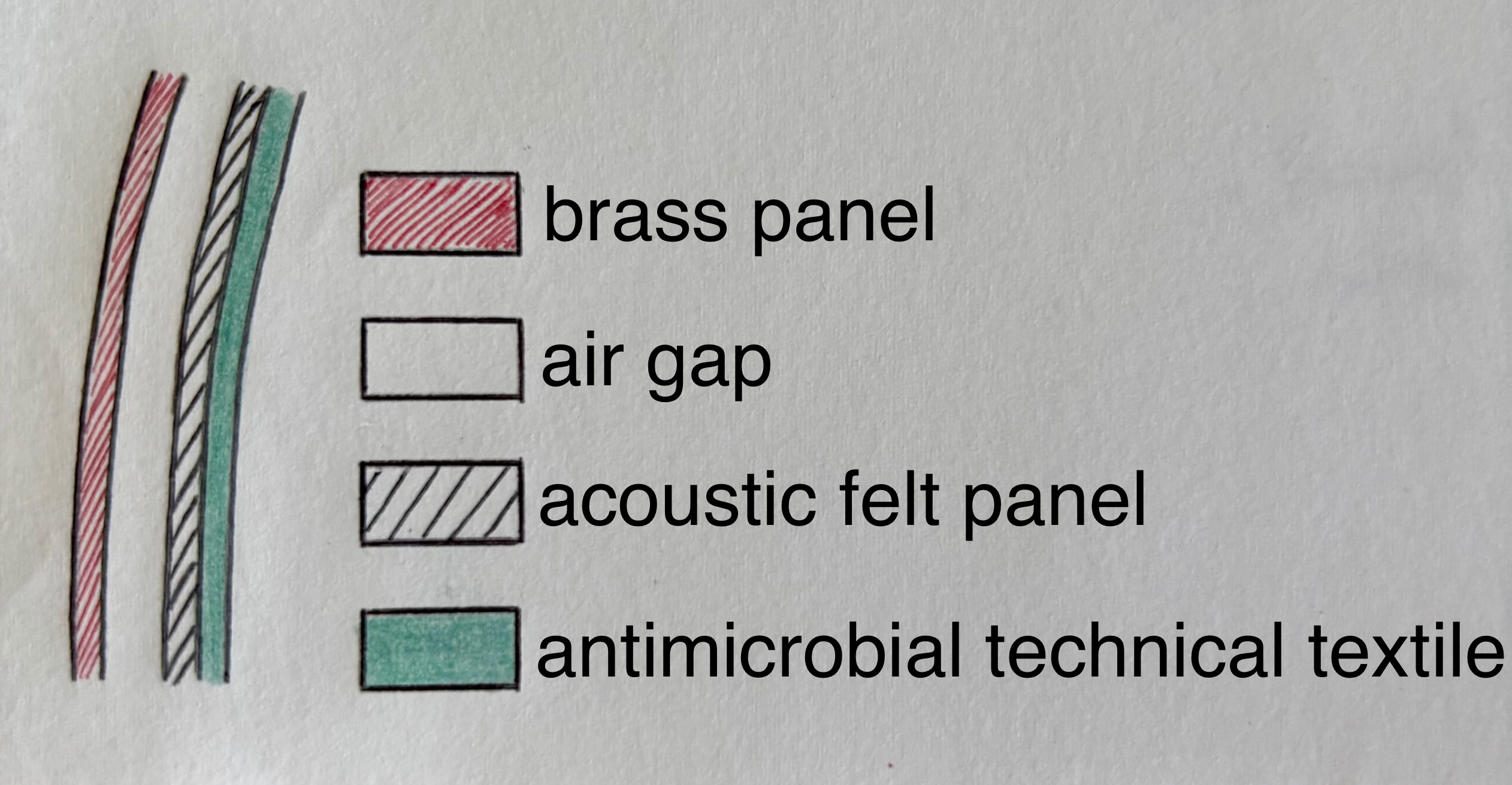
- Detailed drawings – Figure 31 shows the evolution of the design of our idea. First of all, we decided that the cocoon will not be fully closed in order to avoid feelings of claustrophobia, but also so that parents could maintain contact with their child if needed. To allow for true sensory immersion, we wanted to incorporate a chair that could vary its positions (sitting, lying down) and rotate to face the visuals. We also wanted the inside of the cocoon to be accessible for children with reduced mobility, such as those in wheelchairs. We are now thinking about adding small wheels to the chair so it can be easily moved when a child in a wheelchair wants to get into the cocoon. These small wheels can be locked once the chair is inside the cocoon.
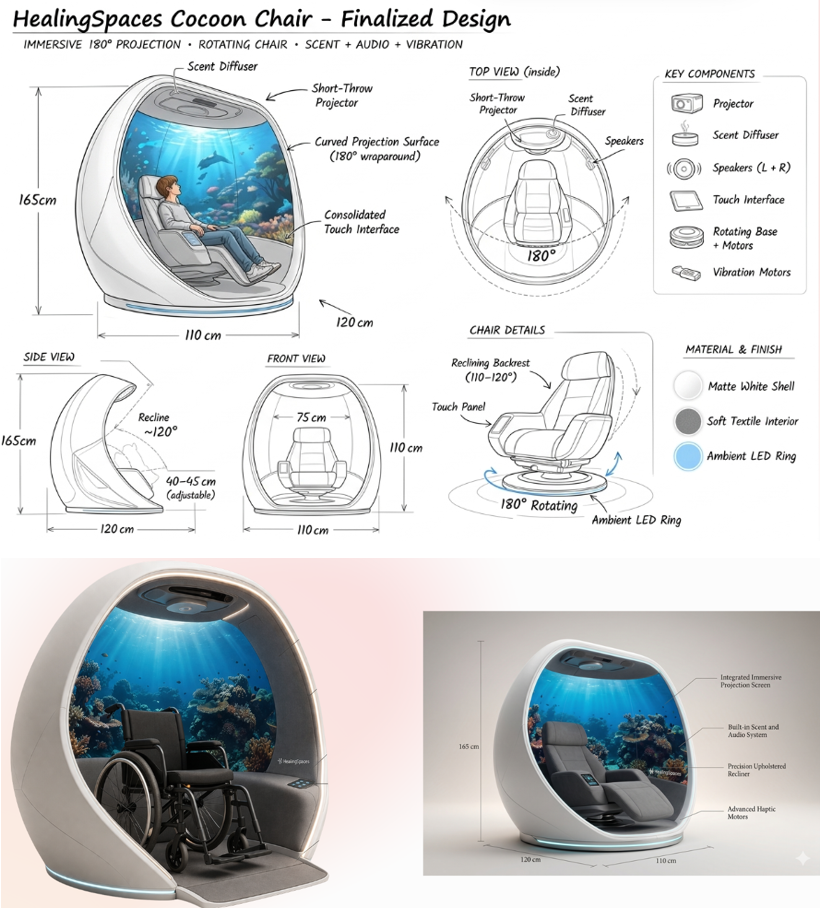
- 3D Model on SolidWorks – Figure 32 shows the 3D Model of the Healing Cocoon made with SolidWorks. The logo will be visible on the back of the cocoon. Furthermore, we removed the cocoon's platform because the multisensory experience will be sufficiently stimulating with sight, sound, and smell. This new design makes moving the chair easier and improves wheelchair access.
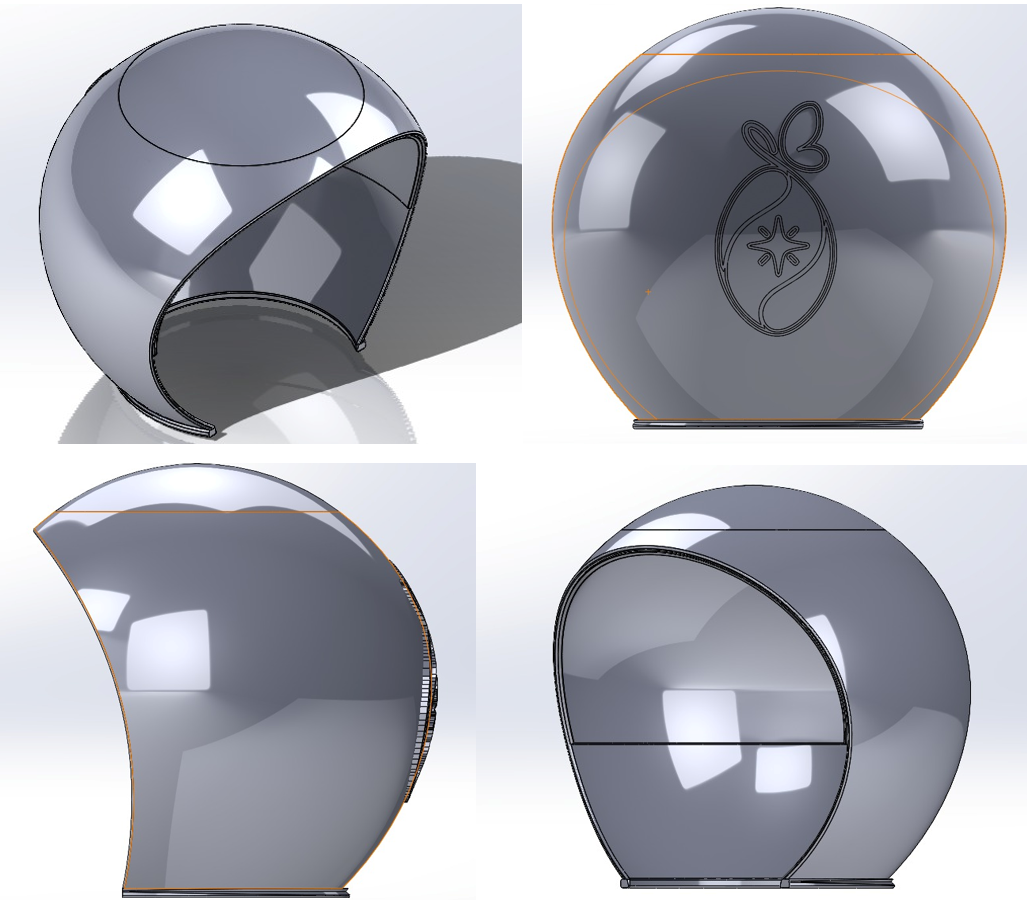
Structure Tests
Introduction
To evaluate the structural performance of the cocoon design, a static simulation was performed in SOLIDWORKS, Figure 33. The cocoon was modeled using copper as the selected material. The analysis focused on the stress distribution and displacement behavior under the applied loads. The goal was to determine whether the structure is strong and rigid enough to withstand external forces without failure or excessive deformation.

Conclusion
The simulation results show that the copper cocoon structure performs safely under the applied load conditions. The maximum stress remains far below the material yield strength, while the displacement is extremely small. This indicates that the design is highly rigid and experiences minimal deformation, confirming that the structure is mechanically stable and suitable for its intended use.
Smart System
Hardware
Black Box Diagram
This diagram represents a high-level overview of an interactive, multi-sensory system, likely designed for patient therapy, relaxation, or an immersive room experience.
Here is the breakdown of how the different parts interact:
Inputs
Cloud: This section handles remote data. It contains an App and Content that communicate with each other. The cloud sends data, media, or instructions down to the main control unit.
User/Patient: This represents the human interaction. The user has a Device to draw (tablet, mobile) that connects to a local App. Whatever the user inputs or draws is sent directly to the central control system.
Core Processing System
Controller: The central microcontroller processes all incoming commands and makes decisions.
Sensors: It continuously reads environmental data using various sensors (Light, Motion, Air, CO2, Moisture). The controller and the sensors talk to each other to adjust the room's environment based on real-time conditions.
Outputs / Actuators Projector: Displays visual content (perhaps the drawings from the user's tablet or media from the cloud).
Scent sprayer: Releases aromas into the room (using your ultrasonic atomizer).
Speaker: Plays audio, music, or sound effects.
Power Supply
This block shows how electrical energy is distributed. It provides power directly to the central Controller, and it also has dedicated power lines going straight to the output devices (Projector, Scent sprayer, Speaker). This is a very important detail, as high-draw components like projectors and speakers need their own direct power lines rather than drawing current through the main controller.
Figure 34 presents the black box diagram.

Hardware component selection
| Name | Type | Supplier | Notes | Price (€) | Quantity | Total (€) |
|---|---|---|---|---|---|---|
| ESP32 DevKit V1, ESP32-WROOM-32 | Processor | Farnell | Dual core 240 MHz, integrated Wi-Fi + Bluetooth. Replaces separate Wi-Fi module. | 8.75 | 1 | 8.75 |
| Light Sensor, BH1750 (GY-302) | Sensor | Botnroll | I2C digital lux sensor, 0–65535 lux, 3.3 V–5 V. Better than LDR — no conversion needed. | 1.87 | 1 | 1.87 |
| CO2 Sensor, MQ-135 | Sensor | Aquario | Detects CO2, NH3, alcohol, benzene, smoke. 10–1000 ppm. Analog + digital output. Compatible 5 V ESP32. | 6.09 | 1 | 6.09 |
| Air Humidity and Temp Sensor, DHT22 (AM2302) | Sensor | Botnroll | Humidity 0–100 % RH (±2 %) + temperature -40 °C–80 °C (±0.5 °C). Single-wire digital output. 3.3 V–5 V. | 6.96 | 1 | 6.96 |
| Scent Sprayer, Ultrasonic atomiser 5 V | Actuator | Botnroll | 108–110 kHz, 5 V USB. Switched via relay. Use with essential oil diluted in water. | 7.00 | 1 | 7.00 |
| Speaker + Amplifier, MAX98357A | Actuator | Aquario | I2S Class-D amp (2.7 V–5.5 V), directly compatible with ESP32. No external DAC needed. | 14.90 | 1 | 14.90 |
| Relay Module, 5 V single-channel relay | Control | Ptrobotics | Controls power to the ultrasonic atomiser from ESP32 GPIO pin. | 4.60 | 1 | 4.60 |
| Power Supply, 5 V 2 A USB adapter | Power | Any local shop | Powers ESP32 + peripherals. USB power bank also works for portability. | 7.26 | 1 | 7.26 |
| Projector | Actuator | Aquario | 174.20 | 1 | 174.20 | |
| Total Cost | 229.75 | |||||
Detailed Schematics
Figure 35 presents the detailed schematics diagram illustrating the precise electronic connections for the “Healing Cocoon” project. This diagram serves as the electrical blueprint, detailing how the central ESP32-WROOM-32 microcontroller is meticulously wired to interface with the various sensors (temperature, light, and air quality) and actuators (speaker and scent sprayer) essential for the system's function. By following these specific pin connections and component values, the physical interaction described in the system architecture can be realized.

Power Budget
Power consumption breakdown for the system's components. Table 5 outlines the nominal and maximum values for current (intensity), voltage, and power, providing a clear overview of the electrical requirements and the total system load.
| Component | Intensity [A] | Intensity (max) [A] | Voltage [V] | Voltage (max) [V] | Power [W] | Power (max) [W] |
|---|---|---|---|---|---|---|
| ESP32 DevKit V1 (WROOM-32) | 0.0800 | 0.500 | 3.30 | 5.00 | 0.264 | 2.50 |
| BH1750 (GY-302) | 0.000140 | 0.00100 | 3.30 | 5.50 | 0.000462 | 0.00550 |
| MQ-135 | 0.150 | 0.160 | 5.00 | 5.10 | 0.750 | 0.816 |
| DHT22 (AM2302) | 0.00150 | 0.00250 | 3.30 | 5.50 | 0.00495 | 0.0138 |
| Atomizador Ultrasónico 5 V | 0.300 | 0.500 | 5.00 | 5.50 | 1.50 | 2.75 |
| MAX98357A | 0.300 | 1.50 | 2.50 | 5.50 | 0.750 | 8.25 |
| Módulo Relé 5 V (1 Canal) | 0.0700 | 0.0900 | 5.00 | 5.50 | 0.350 | 0.495 |
| TOTAL | 0.902 | 2.75 | 3.62 | 14.8 |
Software
Describe in detail the: (i) use cases or user stories for the smart device and app; (ii) selection of development platforms and software components (use tables to compare the different options); (iii) component diagram.
Packaging
The goal is to protect the hardware and materials from damage during transit, while also considering the recyclability and lifecycle of the packaging materials.
To achieve this, in addition to cardboard packaging, we want to use a single, effective type of cushioning material that can be used in all product packaging and is also reusable and biodegradable.
Since our product is intended for children, our packaging will include cushioning material made from particles manufactured from cornstarch. These particles are an environmentally friendly and biodegradable alternative. Furthermore, they can later be used as craft material for children in the waiting room: with a little water, these particles stick together, allowing children to express their creativity and build structures and figures.
- Initial packaging drafts
Our final choice of position is to transport the cocoon panels vertically, in order to avoid overlapping the panels and risking them colliding with each other in the event of a vertical fall. The Figure 36 shows the main box containing the system hardware box and the panels. The drawing on the right of the figure shows the assembly of the cardboard insert.

- Detailed drawings
Main box:
The Figure 37 shows the detailed and simplified design of the main box, viewed from above. It also shows the panel layout and the necessary box dimensions. The Figure 38 shows the folding box template for the main box, with the dimensions added on it. This folding cardboard is based on the FEFCO 0201 standard [60], this heavy duty design uses extended flaps and strong side panels to improve stacking performance and impact resistance.

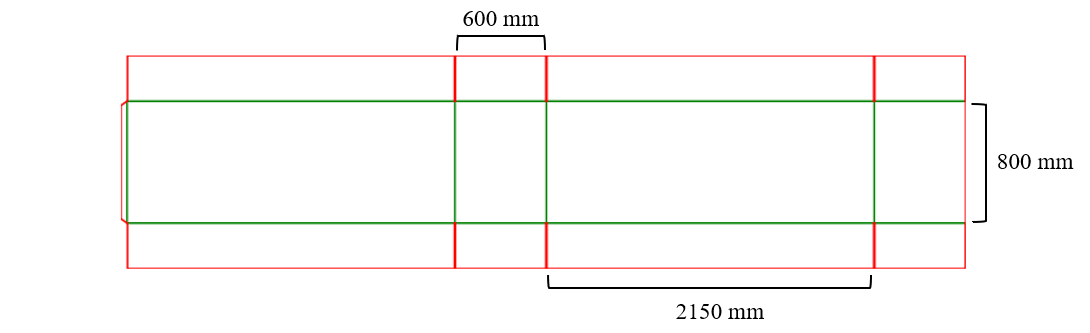
Hardware system box:
The Figure 39 shows the folding box template for the hardware system, with the dimensions and the logo added on it. This folding cardboard is based on the FEFCO 0427 standard [61], featuring a hinged lid that extends from the rear panel and folds over the front for closure. Designed without glue, the structure relies on interlocking tabs to secure the base instead of adhesive. Unlike conventional tuck-end boxes, the assembly method of the bottom is what makes it distinctive: the side panels are folded inward first, followed by the longer bottom flaps that lock into place over them. When assembled in the correct order, the box snaps together quickly and efficiently.
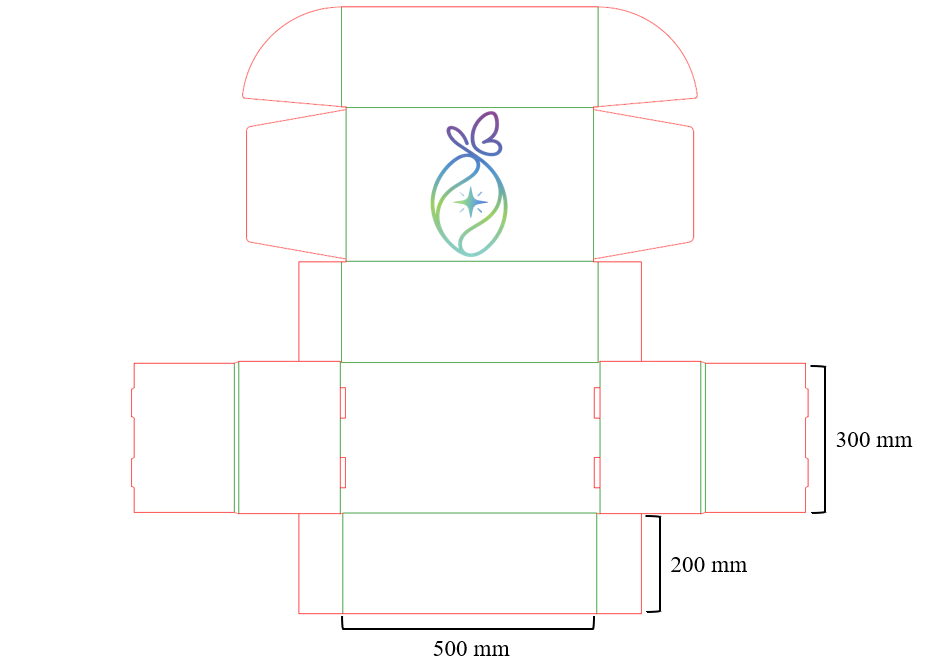
- 3D Model
The Figure 40 shows the 3D model of the system hardware box, which will be located inside the main box shown in the Figure 41.
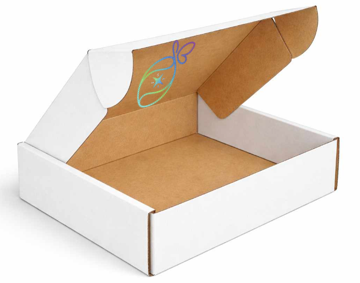
Prototype
Several modifications were made when translating the final design into a physical prototype. The prototype was developed mainly to validate the shape, proportions, and accessibility concept, rather than to demonstrate the complete functionality of the final product.
Compared to the designed solution, the prototype is structurally downscaled and simplified. The final product is intended to include integrated electronics, such as a projection system, speakers, sensors, lighting, and a QR-controlled application. These components were omitted from the prototype, as the immersive experience will instead be demonstrated using an external projector.
Structure
The prototype was scaled down to approximately 65 cm in height and 60 cm in diameter. Instead of the intended materials and manufacturing methods of the final product, a lightweight structure was created using bent PVC tubes. These tubes were connected with custom connectors designed in SolidWorks and produced using 3D printing.
To create the curved shell, strips of paper were cut and attached to the frame. This solution was chosen because it is lightweight, inexpensive, and suitable for quickly visualizing the overall shape.
Several parts of the final design were intentionally omitted, including the electronic components, interior finishes, and control interface. The prototype therefore focuses purely on the exterior form and accessibility of the cocoon.
Overall, the prototype differs significantly from the final product in terms of scale, materials, and functionality. While the final product will consist of durable materials and integrated technology, the prototype serves primarily as a proof of concept to communicate the design intent and validate the overall structure.
Hardware
Detail and explain any change made in relation to the designed solution. In case there are changes regarding the hardware, present the detailed schematics of the prototype.
Software
Detail and explain any changes made in relation to the designed solution, including different software components, tools, platforms, etc.
The code developed for the prototype (smart device and apps) is described here using code flowcharts.
Introduction
For this project, a web-based prototype was developed to simulate how users interact with the Healing Cocoon system.
The main goal of this prototype is to demonstrate how the system would work in practice. The focus is placed on the user experience, the session flow, and the interaction between staff users, child users, and the cocoon system.
In contrast to a purely visual mock-up, this prototype also includes a lightweight backend structure. This makes it possible to simulate communication with external components, such as controllers, projectors, and other smart device elements.
It is important to note that this is still a first demo version. The application can be improved and expanded in future iterations, especially when real hardware integration becomes available.
Technologies & Tools
The prototype was developed using lightweight and accessible technologies. The main reason for this choice was to keep the system simple, understandable, and easy to maintain during the prototype phase.
The frontend was developed using:
- HyperText Markup Language (HTML) for the structure of the pages
- Cascading Style Sheets (CSS) for the design, layout, and responsive interface
- JavaScript for basic interactivity and communication with the backend
No frontend frameworks such as React, Angular, or Vue were used. This decision was made deliberately to keep the interface lightweight and easy to understand. Since the prototype mainly focuses on demonstrating the system flow and user experience, a simple HTML, CSS, and JavaScript structure is sufficient.
For the backend, Python was used together with FastAPI. FastAPI was chosen because it is lightweight, modern, and suitable for building APIs quickly. It also makes it easier to manage future communication with external hardware components, such as:
- ESP32 microcontrollers
- Projectors
- Sound systems
- Scent controllers
- Other smart device modules
The backend acts as a central communication layer between the web application and the technical components of the Healing Cocoon system.
For data storage, SQLite is currently used. SQLite was selected because it is simple, file-based, and does not require a separate database server. This makes it suitable for a first prototype. In later versions, the database could be replaced by a more scalable solution if needed.
Version control is managed through GitHub. This allows the project files to be stored, tracked, and managed in a structured way. It also makes collaboration and future development easier.
For authentication and authorization, Clerk is used as an external authentication provider. This choice was made because implementing a secure authentication system from scratch can be complex and risky. By using an existing authentication provider, the prototype can rely on a more secure and tested solution. This is also relevant from a privacy and GDPR perspective, since authentication involves the processing of user-related data.
The main technologies used in the prototype are therefore:
- HTML, CSS, and JavaScript for the frontend
- Python with FastAPI for the backend API
- SQLite for local data storage
- Clerk for authentication and authorization
- GitHub for version control
Application Architecture
The software architecture of the prototype consists of three main layers:
- Frontend layer
- Backend API layer
- Data and authentication layer
The frontend layer contains the user interface for both staff users and child users. Staff members interact with the dashboard, session configuration pages, accessibility settings, and system settings. Child users interact with a simplified and more visual interface.
The backend API layer is built with FastAPI. This layer is responsible for processing requests from the frontend and preparing the system for future communication with hardware controllers. For example, when a staff member creates a new session, the backend can receive the session data and later forward relevant commands to controllers such as an ESP32.
The data and authentication layer consists of SQLite and Clerk. SQLite stores basic prototype data, while Clerk handles login, authentication, and authorization.
This architecture keeps the system modular. Each part of the application has a clear responsibility, which makes the prototype easier to expand in the future.
Application Overview
The application is divided into two main user roles:
- Staff users, such as clinic or practice staff
- Child users, who are the end users of the cocoon experience
The staff uses a dashboard to manage the system, configure sessions, and monitor active sessions. The child interacts with a much simpler interface designed to be intuitive, calming, and visually clear.
User Interface
The user interface is structured around a clear navigation map to ensure distinct experiences for both staff and child users. The system is organized into the following functional areas:
- Authentication: Secures access to the platform for authorized personnel.
- Staff Platform Navigation:
- Dashboard Overview: The central hub displaying current system status, daily metrics, and quick actions.
- New Session Configuration: The setup flow for customizing environments, sensory outputs, and durations for a child.
- Active Session Monitoring: The control panel used to monitor, pause, or stop an ongoing session.
- Accessibility Settings: Configurations for physical and sensory accommodations.
- System Settings: Management of general practice details, default preferences, and notifications.
- Child View: A simplified, highly visual flow allowing the child to select and experience a calming environment.
Login page
Figure 42 presents the authentication screen for our application.

The login page allows staff members to access the system using secure credentials.
The authentication process is handled through Clerk. This means that the application does not manage passwords directly inside the prototype. Instead, authentication is delegated to an external provider. This improves security and reduces the risk of incorrectly implemented login logic.
It includes fields for:
- Practice name
- Username or email
- Password
This ensures that only authorized staff members can access the management side of the Healing Cocoon system.
Dashboard
Figure 43 shows the top section of the dashboard overview.

Figure 44 shows the detailed metrics section of the dashboard.

The dashboard gives a general overview of the system.
It shows:
- The current status of the cocoon
- The number of sessions planned or completed for the day
- The most used environment
- Accessibility status
- Quick actions for starting or managing a session
From this page, staff can quickly navigate to other parts of the application or start a new session.
New Session page
Figure 45 presents the environment selection for a new session.

Figure 46 presents the parameter adjustments for a new session.

Figure 47 presents the parameter adjustments for a new session.

This page is used to create a new session for a child.
The staff can:
- Enter the child’s name
- Select an environment, such as Ocean, Forest, or Space
- Adjust sound levels
- Adjust scent levels
- Set the duration of the session
- Enable accessibility options if needed
When a new session is created, the selected data can be sent to the FastAPI backend. The backend can then process this session information and store relevant data in SQLite. In a later version, this data can also be used to send commands to hardware controllers such as an ESP32.
This page represents one of the most important functionalities of the system, because it defines the personalized cocoon experience for the child.
Active Session page
Figure 48 presents the active session monitoring overview.

Figure 49 presents the session control panel.

This page displays the currently active session.
It shows:
- The selected environment
- A countdown timer
- The chosen sound level
- The chosen scent level
- The current session status
It also includes controls to:
- Pause the session
- End the session
- Activate an emergency stop
The active session page is important because it gives staff members control over the ongoing experience. In future development, these controls could be connected to real hardware through the FastAPI backend. For example, ending a session could stop the projector, disable scent output, and reset the cocoon environment.
Child View
Figure 50 refers to the child interaction environment selection.

Figure 51 presents the active environment display for the child.

The child view is designed to be simple, calm, and easy to use.
It focuses mainly on visual elements and avoids too much text. The child can choose a calming environment and start the session in a straightforward way.
The interface uses large visual buttons, soft colors, and minimal navigation. This reduces cognitive load and makes the system more accessible for younger users or users who may be overwhelmed by complex interfaces.
Accessibility page
Figure 52 presents the physical accessibility configurations.

Figure 53 presents the sensory accessibility configurations.

This page allows staff to configure accessibility options.
For example:
- Wheelchair access
- Removable seat
- Low stimulation mode
- Reduced sound intensity
- Reduced visual effects
- Adjusted scent output
These settings ensure that the system can be adapted to the needs of different children. Since the Healing Cocoon is intended to provide a calming and supportive experience, accessibility is an important part of the software design.
Settings page
Figure 54 refers to the practice information settings.

Figure 55 refers to the default session preferences.

Figure 56 refers to the privacy and notification configurations.

The settings page is used to manage general system preferences.
It includes:
- Practice information
- Default session settings
- Notification options
- Basic data and privacy settings
The settings page helps staff configure the system according to the needs of their practice. Privacy-related settings are also included because the system may process sensitive user-related data, especially when linked to children, session preferences, or medical environments.
Code flow
The prototype uses a simple but structured software flow.
First, the staff member logs into the system through the authentication page. Authentication is handled by Clerk. After a successful login, the staff member gains access to the dashboard.
From the dashboard, the staff member can create a new session. During this process, session parameters are selected, such as the environment, sound level, scent level, duration, and accessibility options.
The selected session data is then processed by the frontend JavaScript logic and can be sent to the FastAPI backend. The backend is responsible for receiving and handling the data. Relevant session information can be stored in the SQLite database.
The active session page retrieves and displays the selected session data. Staff members can then monitor the session and use control options such as pause, end session, or emergency stop.
The child interacts with the system through the child view. This interface is simplified and focuses on visual interaction rather than technical controls.
In the current prototype, some parts of the hardware interaction are simulated. In a future version, the FastAPI backend can be extended to send real commands to controllers such as an ESP32, projector, sound system, or scent module.
Backend and Hardware Communication
The backend is built with Python and FastAPI. Its main purpose is to act as a bridge between the web application and the technical components of the Healing Cocoon.
FastAPI makes it possible to create clear API endpoints for actions such as:
- Creating a new session
- Starting a session
- Pausing a session
- Ending a session
- Activating an emergency stop
- Sending environment settings to hardware controllers
In a future hardware-integrated version, the backend could communicate with an ESP32 or similar microcontroller. This controller could then activate or adjust different cocoon components, such as lighting, projection, sound, and scent output.
This approach separates the user interface from the hardware logic. As a result, the frontend remains simple, while the backend manages the technical communication.
Database
SQLite is used as the database for the current prototype.
The main reason for using SQLite is its simplicity. It does not require a separate database server and stores data locally in a single file. This makes it suitable for a first prototype and for testing purposes.
The database can be used to store information such as:
- Session data
- Selected environments
- Duration settings
- Accessibility preferences
- Practice settings
For a future production version, a more advanced database system could be considered, such as PostgreSQL or MySQL. This would be more suitable if multiple users, multiple practices, or larger amounts of data need to be supported.
Authentication and Authorization
Authentication and authorization are handled through Clerk.
Authentication verifies the identity of the user, while authorization determines what the user is allowed to access or manage.
Using Clerk provides several advantages:
- It avoids building a custom login system from scratch.
- It reduces the risk of security mistakes in authentication logic.
- It provides a more reliable and tested authentication flow.
- It supports better user management.
- It is more suitable when considering privacy and GDPR-related requirements.
Since the Healing Cocoon system may be used in a healthcare or child-focused context, secure access control is important. Only authorized staff members should be able to access session management, settings, and user-related information.
Version Control
GitHub is used for version control.
This allows the development process to be managed in a structured way. Changes to the code can be tracked, previous versions can be restored if needed, and collaboration becomes easier.
GitHub is also useful for documenting the development process and keeping the frontend, backend, and configuration files organized.
Future improvements
This prototype is only a first version and can be further improved.
Possible future improvements include:
- Full integration with real hardware, such as projectors, ESP32 controllers, scent systems, and sound systems
- Expanding the FastAPI backend with more API endpoints
- Replacing SQLite with a more scalable database such as PostgreSQL
- Adding real-time communication between the frontend and backend
- Adding real-time session monitoring
- Improving authentication and role-based authorization
- Adding detailed logging for sessions and system events
- Adding more advanced personalization for children
- Improving GDPR-related data handling and consent management
- Adding admin roles for practice managers
- Adding error handling for failed hardware communication
Tests & Results
Hardware tests
Perform the hardware tests specified in Tests. These results are presented below in the form of table with three columns: ID, Functionality and Test Result (Pass/Fail).
| ID | Functionality | Status |
|---|---|---|
| FT-GY01 | GY-21 Baseline Calibration Read | Pass |
| FT-GY02 | GY-21 Thermal Responsiveness | Pass |
| FT-GY03 | GY-21 Humidity Saturation | Pass |
| PT-GY01 | GY-21 Environmental Recovery Rate | Pass |
| PT-GY02 | GY-21 I2C Polling Stress (50ms) | Pass |
| FT-BH01 | BH1750 Lux Range Verification | Pass |
| FT-BH02 | BH1750 Shadow Transient Detection | Pass |
| PT-BH01 | BH1750 Continuous Light Exposure | Pass |
| PT-BH02 | BH1750 High-Freq Transitions (10Hz) | Pass |
| FT-MQ01 | MQ-135 Analog Voltage Baseline | Pass |
| FT-MQ02 | MQ-135 VOC Spike Detection | Pass |
| PT-MQ01 | MQ-135 48h Thermal Burn-in Drift | Pass |
| PT-MQ02 | MQ-135 Dissipation Latency | Pass |
| FT-WA01 | Atomizer Digital State Actuation | Pass |
| FT-WA02 | Atomizer Capillary Wicking Action | Pass |
| PT-WA01 | Atomizer 100 Duty Cycles Endurance | Pass |
| PT-WA02 | Atomizer Driver Board Thermal Load | Pass |
| FT-SYS01 | System I2C Address Multiplexing | Pass |
| PT-SYS01 | Power Supply Rail Voltage Stability | Pass |
| PT-SYS02 | System End-to-End Latency | Pass |
Software tests
Software tests comprise: (i) functional tests regarding the identified use cases / user stories; (ii) performance tests regarding exchanged data volume, load and runtime (these tests are usually repeated 10 times to determine the average and standard deviation results); (iii) usability tests according to the System Usability Scale.
Summary
The Healing Cocoon is an evidence-based, multisensory environment designed to alleviate pre-appointment anxiety in pediatric patients. By combining immersive projection, spatial audio, and calming scents in a wheelchair-accessible, semi-enclosed structure, the project provides a hygienic, wearable-free alternative to VR. The team successfully developed the structural design, a functional web application, and hardware integration plans within a €100 budget , prioritizing eco-efficiency and patient safety.
Conclusions
Achievements
- Designed a barrier-free, ergonomic 3D model and validated its structural integrity and safety via SolidWorks simulation.
- Developed a functional web platform featuring a staff dashboard and child interface using HTML/CSS/JS, FastAPI, and SQLite.
- Successfully tested and calibrated the smart system's sensors (BH1750, MQ-135, GY-21) and actuators (scent diffuser, speakers).
- Maintained prototype development costs under the €100 budget constraint while adhering to sustainable, ethical, and clinical hygiene guidelines.
Limitations
- Material Constraints: The current physical prototype is a scaled-down mock-up made of PVC tubes and paper, rather than the intended final premium materials like aluminum, brass, and antimicrobial textiles.
- Hardware-Software Gap: The end-to-end communication between the web backend and the ESP32 hardware controllers is simulated and not yet fully integrated.
Future Development
- Full System Integration: Finalize the full integration between the FastAPI web application and the real hardware for real-time control of the sensory elements.
- Full-Scale Construction: Construct a full-scale, medical-grade prototype using the finalized durable and eco-efficient materials.
- Infrastructure & Clinical Trials: Upgrade the software infrastructure by migrating to a more scalable database like PostgreSQL, and conduct clinical pilot programs to gather empirical feedback from patients.